Ch. 2 The Chemical Level of Organization
Martini - Fundamentals of Anatomy & Physiology 11th Edition
Martini, Nath, Bartholomew11th EditionFundamentals of Anatomy & PhysiologyISBN: 9780136874089Not the one you use?Change textbook
Chapter 2, Problem 19

List seven major functions performed by proteins.

Verified step by step guidance
1
Understand that proteins are essential macromolecules in the body that perform a wide variety of functions necessary for life.
Identify that one major function of proteins is serving as enzymes, which catalyze biochemical reactions to speed up metabolic processes.
Recognize that proteins also provide structural support, forming components of cells and tissues such as collagen in connective tissue.
Note that proteins play a role in transport, such as hemoglobin transporting oxygen in the blood.
Acknowledge that proteins are involved in communication and signaling, including hormones and receptors that regulate physiological processes.
Consider that proteins contribute to immune defense by forming antibodies that recognize and neutralize pathogens.
Remember that proteins are important for movement, as contractile proteins like actin and myosin enable muscle contraction.

Verified video answer for a similar problem:

This video solution was recommended by our tutors as helpful for the problem above.
Video duration:
2m
Was this helpful?

Key Concepts

Here are the essential concepts you must grasp in order to answer the question correctly.

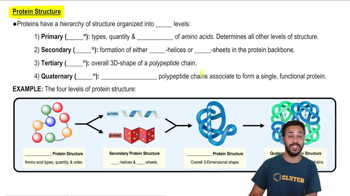
Structural Role of Proteins

Proteins provide structural support to cells and tissues, forming components like collagen in connective tissues and keratin in hair and nails, which maintain shape and integrity.
Recommended video:
04:53
Protein Structure

Enzymatic Function

Proteins act as enzymes that catalyze biochemical reactions, increasing reaction rates without being consumed, essential for metabolism and cellular processes.
Recommended video:
06:04
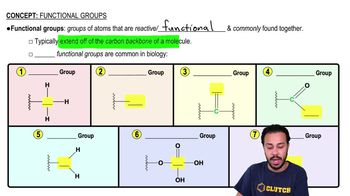
Functional Groups

Transport and Storage

Proteins facilitate the transport of molecules, such as hemoglobin carrying oxygen in blood, and store essential substances, ensuring their availability when needed.
Recommended video:
02:37
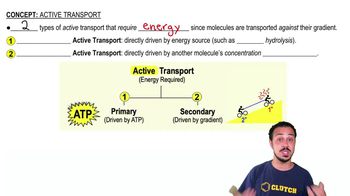
Active Transport