Ch. 23 The Respiratory System
Martini - Fundamentals of Anatomy & Physiology 11th Edition
Martini, Nath, Bartholomew11th EditionFundamentals of Anatomy & PhysiologyISBN: 9780136874089Not the one you use?Change textbook
Chapter 23, Problem 11

What three integrated steps are involved in external respiration?

Verified step by step guidance
1
Step 1: Understand that external respiration refers to the process of gas exchange between the atmosphere and the blood in the lungs. It involves oxygen moving into the blood and carbon dioxide moving out of the blood.
Step 2: Identify the first step as pulmonary ventilation, which is the physical movement of air into and out of the lungs (breathing). This step ensures fresh air reaches the alveoli where gas exchange occurs.
Step 3: Recognize the second step as the diffusion of oxygen from the alveoli into the pulmonary capillaries and the diffusion of carbon dioxide from the blood into the alveoli. This occurs due to concentration gradients across the respiratory membrane.
Step 4: Note the third step as the transport of oxygen and carbon dioxide between the lungs and body tissues via the bloodstream, primarily bound to hemoglobin in red blood cells.
Step 5: Summarize that these three integrated steps—pulmonary ventilation, gas diffusion across the respiratory membrane, and gas transport in the blood—work together to accomplish external respiration.

Verified video answer for a similar problem:

This video solution was recommended by our tutors as helpful for the problem above.
Was this helpful?

Key Concepts

Here are the essential concepts you must grasp in order to answer the question correctly.

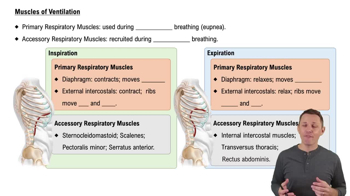
Pulmonary Ventilation

Pulmonary ventilation is the process of moving air into and out of the lungs, enabling the exchange of gases with the external environment. It involves inhalation, where air rich in oxygen enters the lungs, and exhalation, where carbon dioxide is expelled.
Recommended video:
Guided course
8:04
Muscles of Ventilation

Gas Diffusion Across the Respiratory Membrane

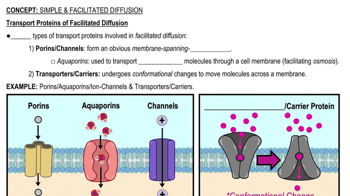
This step involves the passive movement of oxygen and carbon dioxide between the alveoli and the blood in pulmonary capillaries. Oxygen diffuses from the alveolar air into the blood, while carbon dioxide diffuses from the blood into the alveoli to be exhaled.
Recommended video:
04:49
Transport Proteins of Facilitated Diffusion

Transport of Gases in the Blood

After diffusion, oxygen is transported by hemoglobin in red blood cells to body tissues, while carbon dioxide, produced by cellular metabolism, is carried back to the lungs for removal. This transport ensures continuous gas exchange and cellular respiration.
Recommended video:
02:37
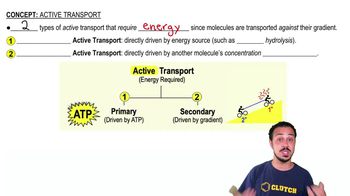
Active Transport