Ch. 11 - Characterizing and Classifying Prokaryotes
Bauman - Microbiology with Diseases by Taxonomy 6th Edition
Bauman6th EditionMicrobiology with Diseases by TaxonomyISBN: 9780134832302Not the one you use?Change textbook
Chapter 11, Problem 4

Name three groups of low G + C Gram-positive bacteria.

Verified step by step guidance
1
Understand that 'low G + C Gram-positive bacteria' refers to bacteria with a low proportion of guanine (G) and cytosine (C) bases in their DNA, typically less than 50%. This classification is important in bacterial taxonomy.
Recall that the phylum Firmicutes includes many Gram-positive bacteria, and within this group, the low G + C content bacteria are primarily found in the class Bacilli and the class Clostridia.
Identify three major groups (genera or families) of low G + C Gram-positive bacteria: 1) Clostridia, which are obligate anaerobes and form endospores; 2) Bacilli, which include aerobic or facultative anaerobic spore-formers; and 3) Lactobacillales, which are non-spore-forming and include lactic acid bacteria.
Summarize the groups as: Clostridia, Bacilli, and Lactobacillales, each with distinct characteristics but all sharing the low G + C Gram-positive trait.
Note that these groups are important in various contexts such as human health, industry, and ecology, making their identification relevant in microbiology.

Verified video answer for a similar problem:

This video solution was recommended by our tutors as helpful for the problem above.
Video duration:
2m
Was this helpful?

Key Concepts

Here are the essential concepts you must grasp in order to answer the question correctly.

Gram-positive Bacteria

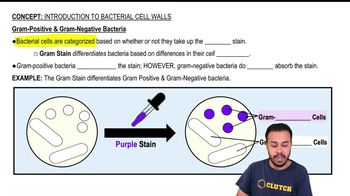
Gram-positive bacteria have a thick peptidoglycan cell wall that retains the crystal violet stain during Gram staining, appearing purple under a microscope. This group includes diverse bacteria classified based on genetic and phenotypic traits.
Recommended video:
Guided course
02:20
Gram-Positive & Gram-Negative Bacteria

G + C Content in Bacterial DNA

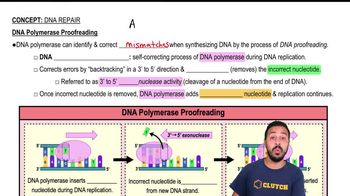
The G + C content refers to the percentage of guanine and cytosine bases in bacterial DNA. Low G + C Gram-positive bacteria have less than 50% G + C content, which influences their genetic characteristics and classification.
Recommended video:
Guided course
06:13
DNA Polymerase Proofreading

Major Groups of Low G + C Gram-positive Bacteria

Three main groups of low G + C Gram-positive bacteria are Clostridia (anaerobic spore-formers), Bacilli (aerobic or facultative spore-formers), and the Lactobacillales (non-spore-forming lactic acid bacteria). These groups differ in metabolism, oxygen requirements, and ecological roles.
Recommended video:
Guided course
02:20
Gram-Positive & Gram-Negative Bacteria