Ch. 6 - Microbial Nutrition and Growth
Chapter 6, Problem V2

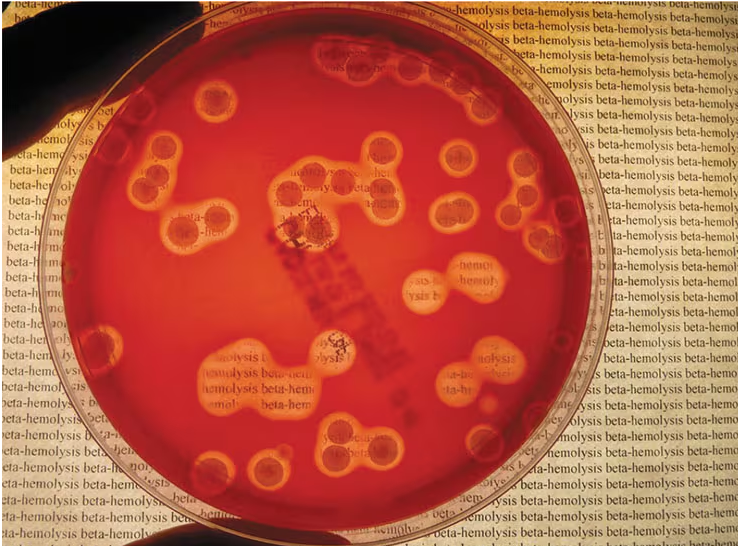
Describe the type of hemolysis shown by the pathogen Staphylococcus aureus pictured here.
Petri dish showing clear zones around Staphylococcus aureus colonies indicating beta-hemolysis on blood agar.

Verified step by step guidance
1
Understand that hemolysis refers to the breakdown of red blood cells (RBCs) by bacterial enzymes, which can be observed as clear zones around bacterial colonies on blood agar plates.
Recall the three main types of hemolysis: alpha (partial hemolysis, greenish discoloration), beta (complete hemolysis, clear zone), and gamma (no hemolysis, no change in the medium).
Know that Staphylococcus aureus typically exhibits beta-hemolysis, meaning it produces clear, transparent zones around colonies due to complete lysis of RBCs.
Examine the image (if available) for a clear, transparent zone surrounding the bacterial colonies, which indicates beta-hemolysis.
Conclude that the type of hemolysis shown by Staphylococcus aureus is beta-hemolysis, characterized by complete destruction of red blood cells around the colonies.

Verified video answer for a similar problem:

This video solution was recommended by our tutors as helpful for the problem above.
Video duration:
2m
Was this helpful?

Key Concepts

Here are the essential concepts you must grasp in order to answer the question correctly.

Hemolysis Types

Hemolysis refers to the breakdown of red blood cells by bacterial enzymes on blood agar plates. The main types are alpha (partial, greenish discoloration), beta (complete clearing), and gamma (no hemolysis). Identifying hemolysis type helps differentiate bacterial species.
Recommended video:
Guided course
01:06
Types of Phosphorylation

Staphylococcus aureus Characteristics

Staphylococcus aureus is a Gram-positive cocci known for producing beta-hemolysis on blood agar. It completely lyses red blood cells, creating clear zones around colonies, which aids in its identification in clinical microbiology.
Recommended video:
Guided course
05:09
Intro to Characteristics of Infectious Disease

Blood Agar as a Diagnostic Medium

Blood agar is a nutrient-rich medium containing red blood cells, used to observe hemolytic activity of bacteria. It helps distinguish pathogens based on their hemolysis patterns, making it essential for diagnosing infections caused by organisms like S. aureus.
Recommended video:
Guided course
03:49
Introduction to Cultivating Microbial Growth