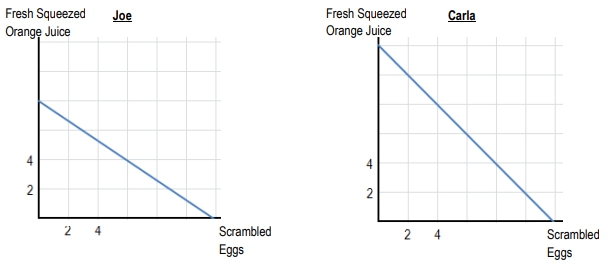
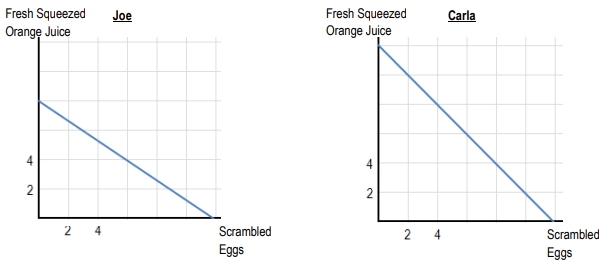
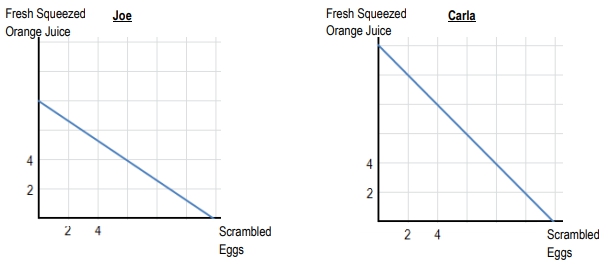
When analyzing productivity differences between individuals, firms, or countries, it is essential to understand how these variations influence production possibilities and trade benefits. Consider a scenario where two parties are preparing for an event, each capable of producing two goods: hunch punch and pizza rolls. Using a simplified linear model, which assumes fixed technology and resources, we can compare their production capabilities.
For example, one producer can make up to 20 gallons of hunch punch or 10 batches of pizza rolls if they specialize exclusively in one good. Meanwhile, the other producer can produce 30 gallons of hunch punch or 30 batches of pizza rolls. At first glance, the second producer appears more productive in both goods, holding an absolute advantage, which means producing more of a good with the same resources or time.
However, absolute advantage alone does not determine the potential gains from trade. Instead, the concept of comparative advantage is crucial. Comparative advantage occurs when a producer can produce a good at a lower opportunity cost than another. Opportunity cost represents the value of the next best alternative foregone when making a choice. In this context, it answers the question: what must be sacrificed to produce one more unit of a good?
By specializing in the good for which each party has a comparative advantage, both can increase overall production and enjoy more goods than if they worked independently. This principle underpins the benefits of trade and specialization, demonstrating that even if one producer is more efficient in all goods, mutually beneficial exchange is still possible.
To calculate opportunity cost, consider the trade-offs between producing hunch punch and pizza rolls. For instance, if producing one batch of pizza rolls means giving up a certain amount of hunch punch, that ratio defines the opportunity cost. Understanding these calculations allows producers to identify their comparative advantages and make informed decisions about specialization and trade.