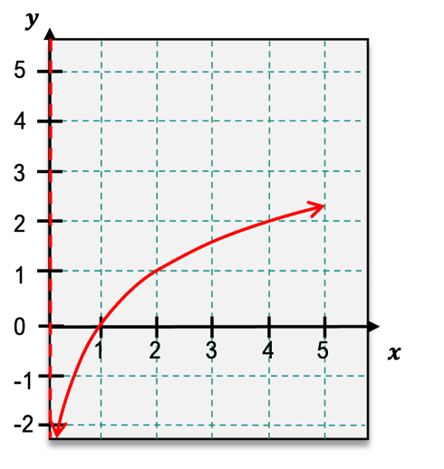
Multiple ChoiceFor the following graph, find the open intervals for which the function is concave up or concave down. Identify any inflection points.121views
Multiple ChoiceFor the following graph, find the open intervals for which the function is concave up or concave down. Identify any inflection points.279views4rank
Multiple ChoiceThe graph of f′(x)f^{\(\prime\)}\(\left\)(x\(\right\))f′(x)is shown below. Use the graph to determine the intervals for which f(x)f\(\left\)(x\(\right\))f(x)is concave up or concave down and the location of any inflection points.132views1rank
Multiple ChoiceThe graph of f′′(x)f''(x)f′′(x) is shown below. Use the graph to determine the intervals for which f(x)f\(\left\)(x\(\right\))f(x)is concave up or concave down and the location of any inflection points.232views
Multiple ChoiceDetermine the intervals for which the function is concave up or concave down. State the inflection points.f(x)=2x(x+9)2f(x)=2x(x+9)^2f(x)=2x(x+9)2195views
Multiple ChoiceDetermine the intervals for which the function is concave up or concave down. State the inflection points.f(x)=72x−9f(x)=\(\frac{7}{2x-9}\)f(x)=2x−97196views1rank
Multiple ChoiceDetermine the intervals for which the function is concave up or concave down. State the inflection points.f(x)=4ln(3x2)f(x)=4\(\ln\)(3x^2)f(x)=4ln(3x2)195views