4. Is a reduction formula an analytical method or a numerical method? Explain.
Verified step by step guidance
1
Step 1: Understand the concept of a reduction formula. A reduction formula is a mathematical expression that relates an integral of a function to an integral of the same function with a reduced parameter. It is often used to simplify the computation of integrals by breaking them down into smaller, more manageable parts.
Step 2: Recognize the distinction between analytical and numerical methods. Analytical methods involve solving problems using exact mathematical expressions and formulas, while numerical methods rely on approximations and computational techniques to find solutions.
Step 3: Analyze the nature of a reduction formula. Since a reduction formula provides a systematic way to simplify and solve integrals using algebraic manipulation and exact relationships, it falls under the category of analytical methods.
Step 4: Consider examples of reduction formulas, such as the reduction formula for the factorial function or trigonometric integrals. These formulas are derived using algebraic techniques and are used to compute integrals step by step analytically.
Step 5: Conclude that a reduction formula is an analytical method because it relies on exact mathematical relationships and does not involve numerical approximations or computational techniques.
Verified video answer for a similar problem:
This video solution was recommended by our tutors as helpful for the problem above
Video duration:
44s
Play a video:
0 Comments
Key Concepts
Here are the essential concepts you must grasp in order to answer the question correctly.
Reduction Formula
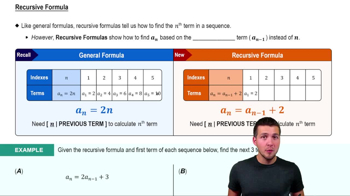
A reduction formula is a recursive relationship that expresses a problem in terms of a simpler or smaller instance of the same problem. It is often used in calculus to simplify the evaluation of integrals or sums by breaking them down into more manageable parts. This method can lead to a solution by repeatedly applying the formula until reaching a base case.
An analytical method involves solving problems using algebraic manipulations and exact formulas, leading to precise solutions. In calculus, this includes techniques like integration by parts, substitution, and the use of reduction formulas. Analytical methods aim to derive a general solution that can be applied to a wide range of problems.
Numerical methods are techniques used to approximate solutions to mathematical problems that may not be easily solvable analytically. These methods involve algorithms and computational techniques to obtain numerical results, often used when dealing with complex integrals or differential equations. Unlike analytical methods, numerical methods provide approximate solutions rather than exact ones.