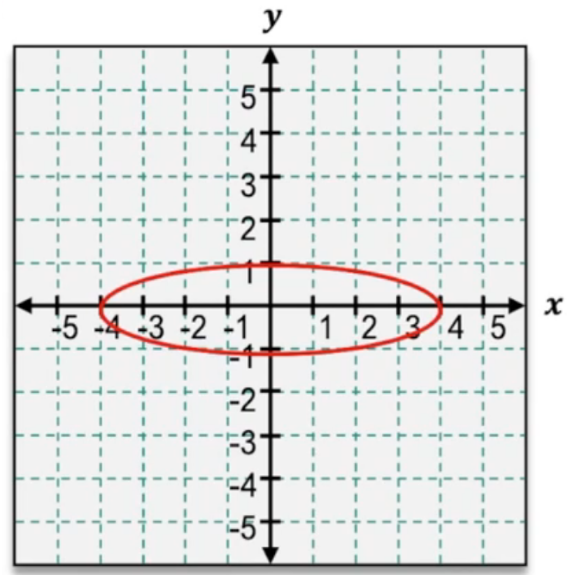
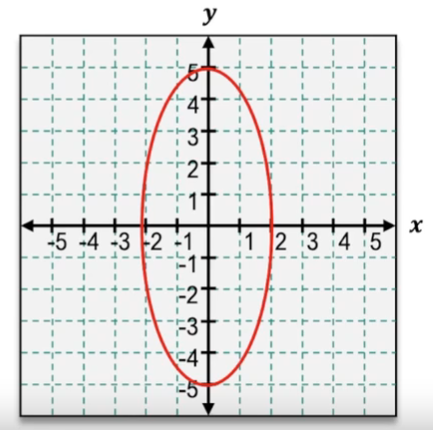
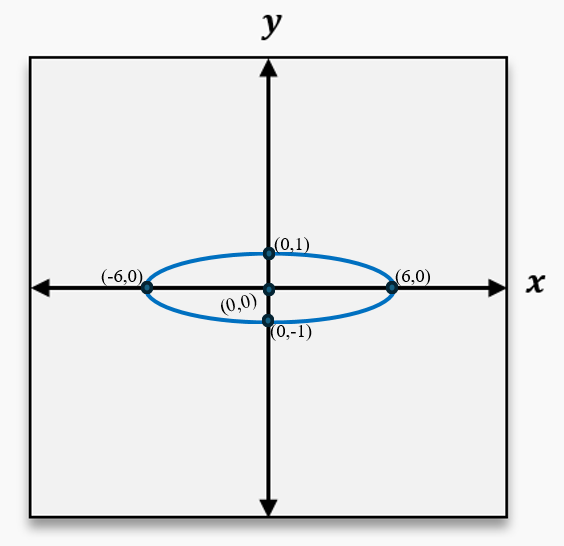
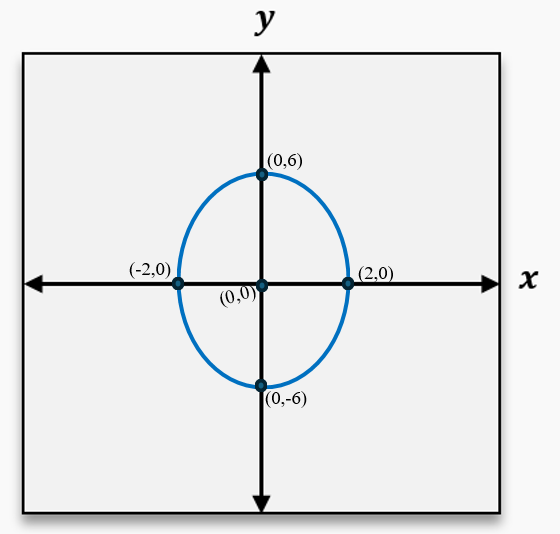
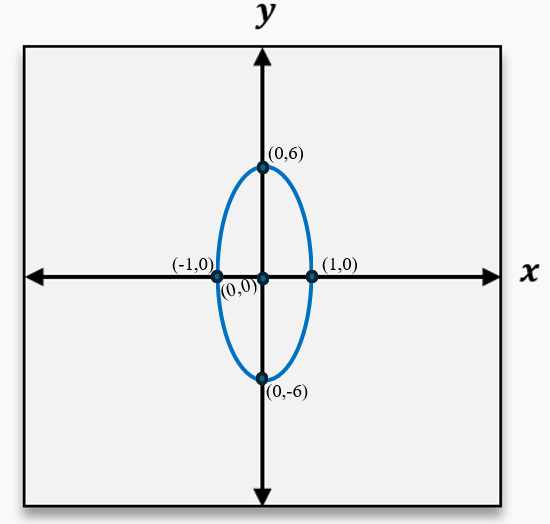
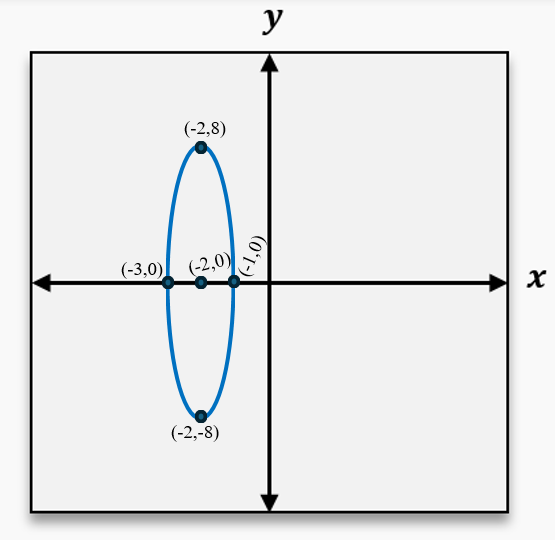
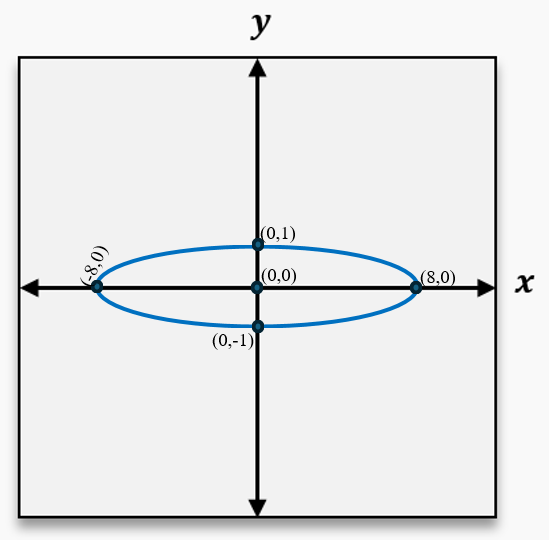
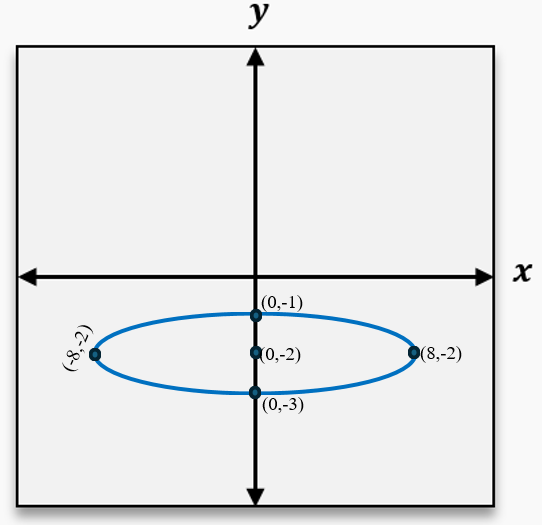
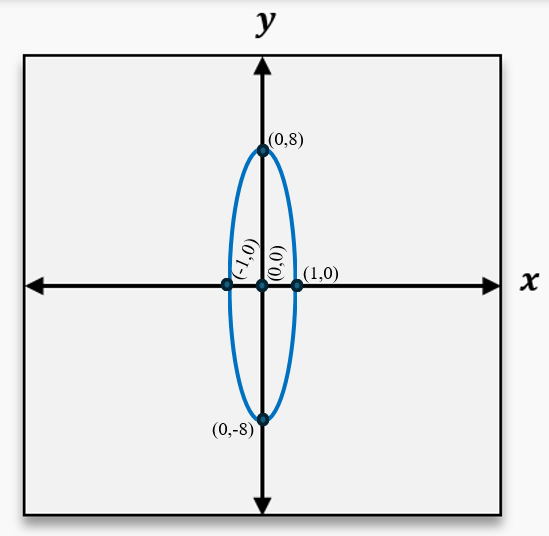
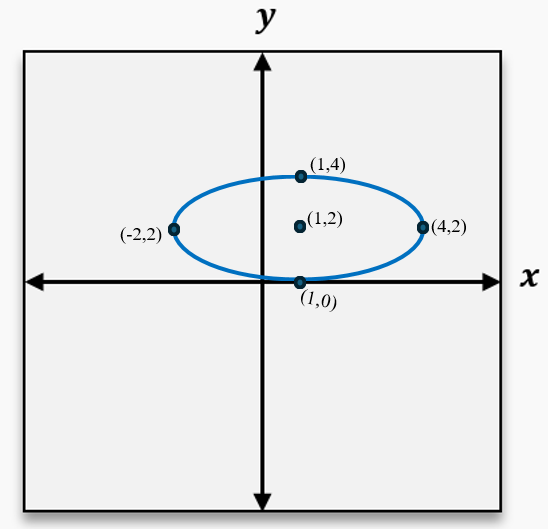
An ellipse is a geometric shape closely related to a circle but with distinct properties. While a circle consists of all points equidistant from a single center point, an ellipse is defined as the set of all points where the sum of the distances to two fixed points, called the foci, remains constant. This difference means that instead of a single radius, an ellipse has two key distances that determine its shape.
Ellipses can be oriented either vertically or horizontally. In a vertically stretched ellipse, the foci lie along the y-axis, and the ellipse extends further in the vertical direction. Conversely, in a horizontally stretched ellipse, the foci are positioned along the x-axis, and the ellipse stretches more horizontally. The two main parameters that describe an ellipse are a and b, representing the distances from the center to the ellipse along the major and minor axes, respectively. For a vertical ellipse, b is the longer distance (vertical stretch), and a is the shorter (horizontal). For a horizontal ellipse, a is the longer distance (horizontal stretch), and b is the shorter (vertical).
The equation of an ellipse centered at the origin is similar in form to the equation of a circle but accounts for these two distances. The general form is:
\[\frac{x^2}{a^2} + \frac{y^2}{b^2} = 1\]Here, a and b are the lengths of the semi-major and semi-minor axes, respectively. For example, if an ellipse is vertically stretched with a = 3 and b = 4, its equation becomes:
\[\frac{x^2}{3^2} + \frac{y^2}{4^2} = 1 \quad \Rightarrow \quad \frac{x^2}{9} + \frac{y^2}{16} = 1\]For a horizontally stretched ellipse with a = 4 and b = 3, the equation is:
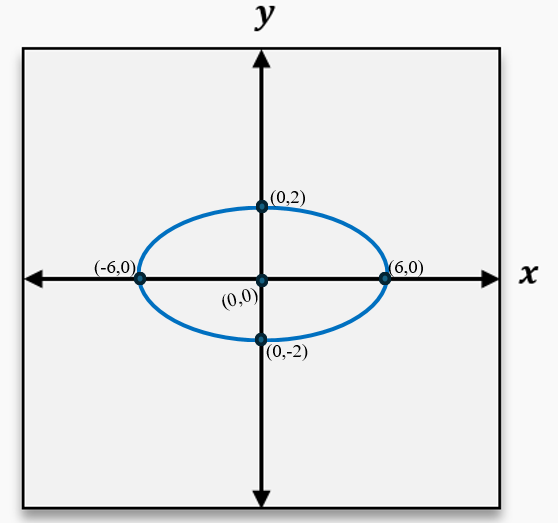
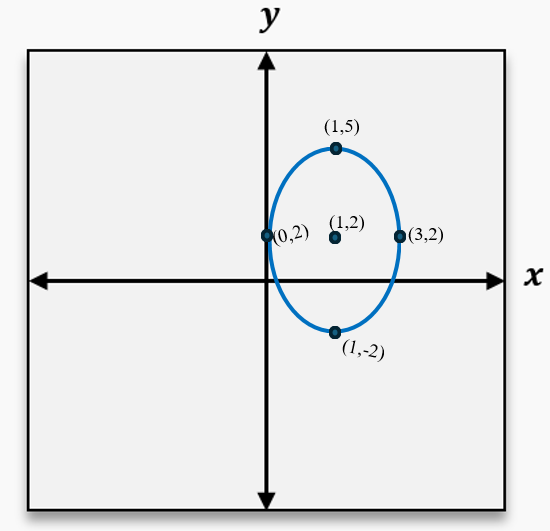
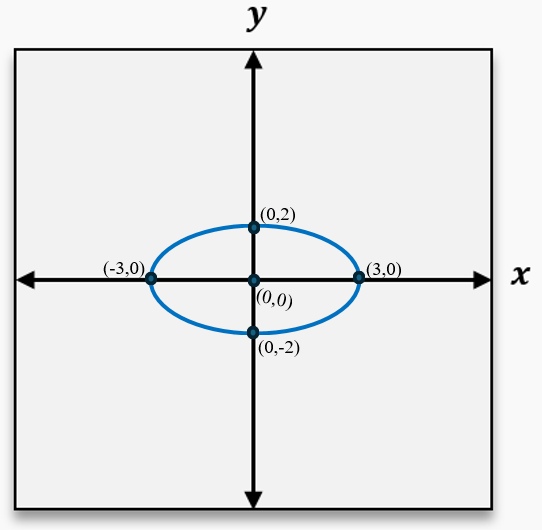
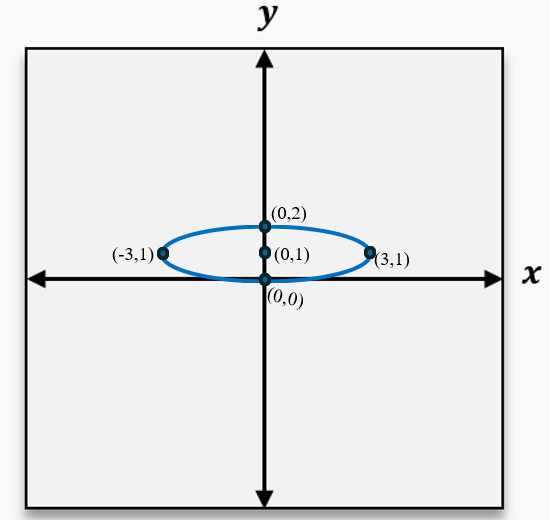
\[\frac{x^2}{4^2} + \frac{y^2}{3^2} = 1 \quad \Rightarrow \quad \frac{x^2}{16} + \frac{y^2}{9} = 1\]Graphing an ellipse involves plotting points at distances a units left and right, and b units up and down from the center, typically the origin. Connecting these points with a smooth, oval curve forms the ellipse. This method parallels graphing a circle but requires attention to the two different radii.
Understanding ellipses deepens comprehension of conic sections and their properties, highlighting how stretching a circle along one axis transforms it into an ellipse. Recognizing the role of the foci and the relationship between a and b is essential for analyzing and graphing ellipses effectively.