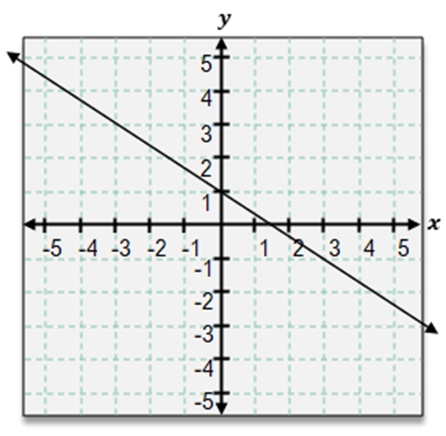
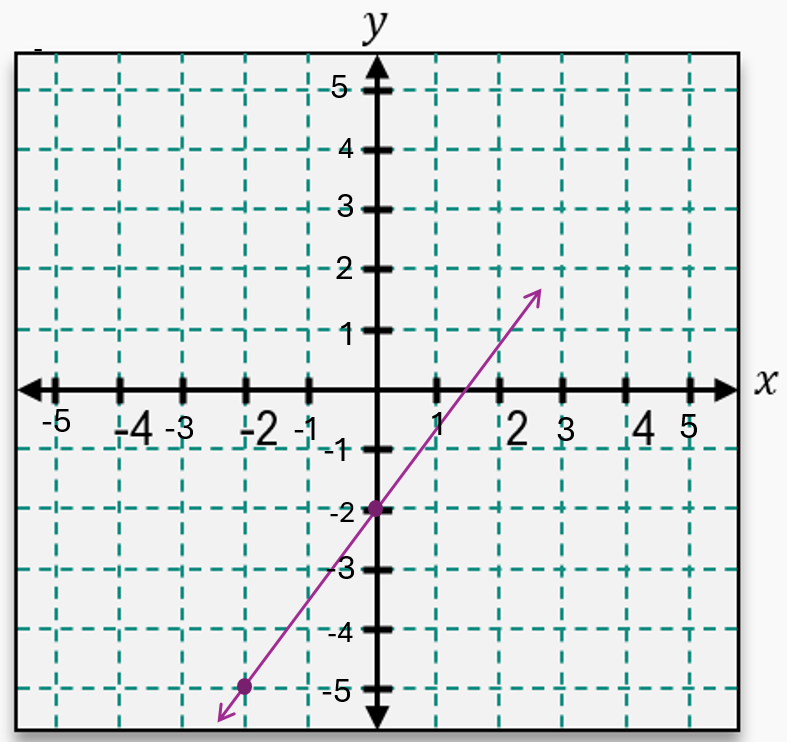
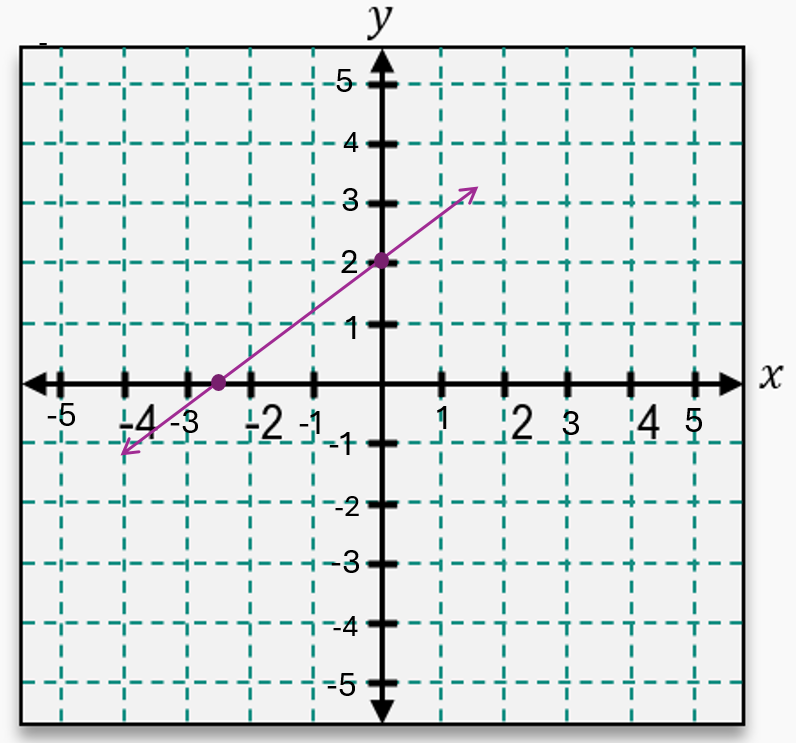
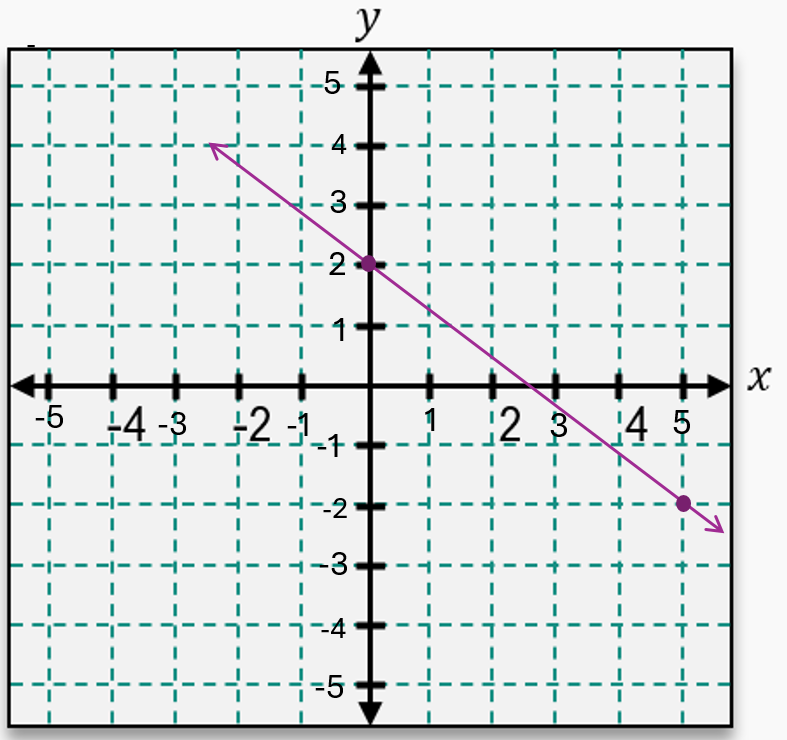
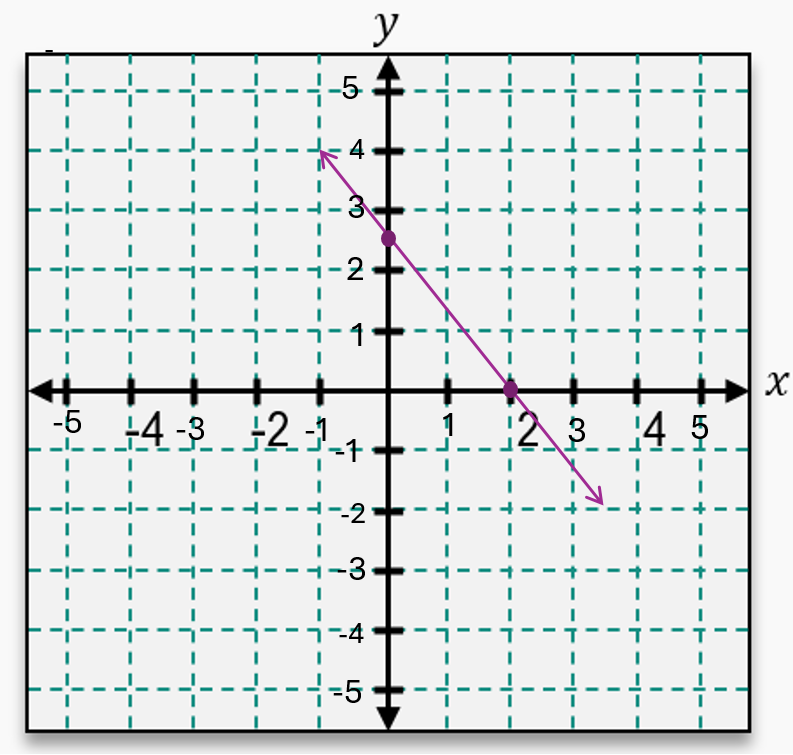
Understanding the concepts of parallel and perpendicular lines is fundamental in geometry and algebra, especially when working with linear equations. Parallel lines are defined as lines in a plane that never intersect; they extend infinitely without crossing each other. Mathematically, parallel lines have identical slopes but different y-intercepts. This means if two lines have equations in slope-intercept form, $y = mx + b$, their slopes (\(m\)) will be equal, but their y-intercepts (\(b\)) will differ. For example, if one line has a slope of \(\frac{3}{2}\) and a y-intercept of 4, a parallel line will also have a slope of \(\frac{3}{2}\) but a different y-intercept, such as 1. This distinction ensures the lines remain separate and do not overlap.
Perpendicular lines, on the other hand, intersect at a right angle, forming a 90-degree angle between them. The key characteristic of perpendicular lines lies in the relationship between their slopes. Specifically, the slopes of two perpendicular lines are negative reciprocals of each other. If one line has a slope \(m\), the other line’s slope will be \(-\frac{1}{m}\). For instance, if one line’s slope is \(\frac{3}{2}\), a line perpendicular to it will have a slope of \(-\frac{2}{3}\). This negative reciprocal relationship guarantees the lines intersect perpendicularly, regardless of their y-intercepts, which can be the same or different.
To determine whether two lines are parallel, perpendicular, or neither, it is essential to express their equations in slope-intercept form, $y = mx + b$. This form clearly reveals the slope and y-intercept, allowing for straightforward comparison. For example, consider the lines given by the equations \(y = \frac{1}{3}x + 4\) and \(2y + 6x = 12\). By rearranging the second equation into slope-intercept form, we get:
\[
2y = -6x + 12
\]
\[
y = -3x + 6
\]
Here, the slopes are \(\frac{1}{3}\) and \(-3\), respectively. Since these slopes are negative reciprocals (\(-3 = -\frac{1}{\frac{1}{3}}\)), the lines are perpendicular. If the slopes had been equal, the lines would be parallel, and if neither condition was met, the lines would be neither parallel nor perpendicular.
Mastering the identification and mathematical representation of parallel and perpendicular lines enhances problem-solving skills in coordinate geometry. Recognizing slope relationships not only aids in graphing but also in understanding the geometric properties of lines in various contexts.