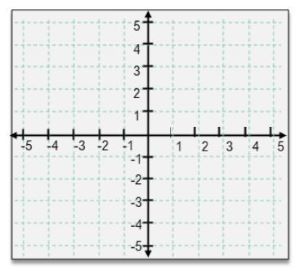
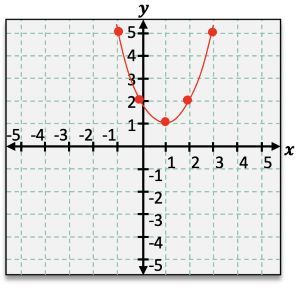
In mathematics, understanding the rectangular coordinate system, also known as the Cartesian plane, is essential for graphing relationships between two variables. This system consists of two perpendicular number lines: the horizontal x-axis and the vertical y-axis, which intersect at the origin, designated as (0, 0). This intersection serves as the reference point for all other coordinates.
Coordinates are expressed as ordered pairs in the format (x, y), where 'x' represents the horizontal position and 'y' represents the vertical position. For example, the coordinate (4, 3) indicates moving 4 units along the x-axis and then 3 units up along the y-axis. Conversely, negative values indicate movement in the opposite direction; for instance, the coordinate (-3, 2) requires moving 3 units to the left and then 2 units up from the origin.
When plotting points, it is crucial to recognize the significance of the origin, which divides the plane into four quadrants. Quadrant I contains positive x and y values, Quadrant II has negative x values and positive y values, Quadrant III has both negative x and y values, and Quadrant IV has positive x values and negative y values. This division helps in identifying the location of points based on their coordinates.
To graph points like (-2, -3), one would move 2 units to the left and then 3 units down from the origin. Similarly, for (5, -4), you would move 5 units to the right and then 4 units down. The origin itself is represented by (0, 0), while points like (0, -3) indicate no movement along the x-axis and a downward movement to -3 on the y-axis.
Overall, mastering the plotting of points in the rectangular coordinate system is foundational for further studies in mathematics, particularly in understanding functions and their graphical representations. The ability to navigate through the four quadrants and accurately plot ordered pairs will enhance your skills in analyzing relationships between variables.