If one is constructing a phylogeny of reptiles using DNA sequence data, which taxon (birds, mammals, amphibians, or fish) might be suitable to use as an outgroup?
Verified step by step guidance
1
Understand the concept of an outgroup: In phylogenetics, an outgroup is a taxon that is closely related to the group of interest (the ingroup) but is not part of it. The outgroup helps root the phylogenetic tree and provides a point of comparison for determining ancestral and derived traits.
Identify the ingroup: The ingroup in this problem consists of reptiles, which include species such as lizards, snakes, turtles, and crocodilians.
Evaluate the options: Birds, mammals, amphibians, and fish are provided as potential outgroups. To select an appropriate outgroup, it should be outside the ingroup (reptiles) but still share a common ancestor with them.
Consider evolutionary relationships: Birds are closely related to reptiles and are often considered part of the reptile clade in modern classifications. Mammals are more distantly related to reptiles, while amphibians and fish diverged earlier in evolutionary history.
Select the most suitable outgroup: Amphibians or fish might be suitable outgroups because they are outside the reptile clade and diverged earlier in the evolutionary timeline, providing a clear comparison point for rooting the phylogeny of reptiles.
Verified video answer for a similar problem:
This video solution was recommended by our tutors as helpful for the problem above
Video duration:
1m
Play a video:
Was this helpful?
Key Concepts
Here are the essential concepts you must grasp in order to answer the question correctly.
Phylogeny
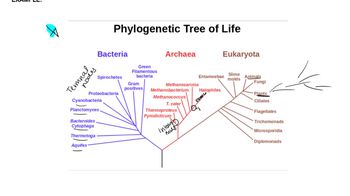
Phylogeny refers to the evolutionary history and relationships among species or groups of organisms. It is often represented as a tree-like diagram, illustrating how different taxa are related through common ancestors. Understanding phylogenetic relationships is crucial for classifying organisms and studying their evolutionary processes.
An outgroup is a taxon that is closely related to the group being studied (the ingroup) but is not part of it. In phylogenetic analysis, outgroups are used to provide a reference point for determining the evolutionary traits of the ingroup. By comparing the ingroup to the outgroup, researchers can infer the direction of evolutionary changes.
DNA Sequence Data
DNA sequence data involves analyzing the nucleotide sequences of organisms' genomes to determine genetic relationships. This molecular approach provides precise information about genetic similarities and differences, which can be used to construct phylogenetic trees. The use of DNA data has revolutionized the field of systematics, allowing for more accurate classifications based on genetic evidence.