Explain the importance of the following features in conjugating donor bacteria: the conjugation pilus
Verified step by step guidance
1
Understand the concept of bacterial conjugation: Bacterial conjugation is a process of horizontal gene transfer where genetic material is exchanged between two bacterial cells, typically involving a donor and a recipient cell.
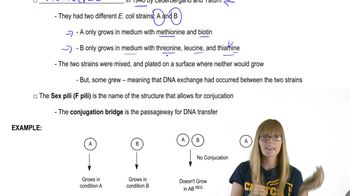
Learn the role of the conjugation pilus: The conjugation pilus, also known as the sex pilus, is a specialized structure formed by the donor bacterium. It is essential for initiating contact between the donor and recipient cells.
Explore how the pilus facilitates DNA transfer: The conjugation pilus acts as a bridge or tether, pulling the recipient cell closer to the donor cell. This physical connection allows the formation of a mating pair and the transfer of genetic material, such as plasmids, through a direct channel.
Understand the genetic basis of pilus formation: The genes responsible for pilus formation are typically located on the F plasmid (fertility plasmid) in donor bacteria. These genes encode the proteins required to assemble the pilus and initiate conjugation.
Recognize the importance of the pilus in genetic diversity: The conjugation pilus plays a critical role in promoting genetic diversity among bacterial populations by enabling the exchange of genetic material, which can include antibiotic resistance genes or other adaptive traits.
Verified video answer for a similar problem:
This video solution was recommended by our tutors as helpful for the problem above
Video duration:
2m
Play a video:
Was this helpful?
Key Concepts
Here are the essential concepts you must grasp in order to answer the question correctly.
Conjugation Pilus
The conjugation pilus is a specialized structure produced by donor bacteria that facilitates the transfer of genetic material to recipient bacteria. This thin, tube-like appendage connects two bacterial cells, allowing for the direct transfer of plasmids or other genetic elements. The pilus plays a crucial role in establishing a stable connection, ensuring that the genetic material is successfully transferred during the process of conjugation.
Horizontal gene transfer (HGT) is the process by which bacteria exchange genetic material with one another, rather than inheriting it from parent organisms. This mechanism, which includes conjugation, transformation, and transduction, is vital for genetic diversity and adaptation in bacterial populations. HGT allows for the rapid spread of advantageous traits, such as antibiotic resistance, among bacteria, significantly impacting their evolution and survival.
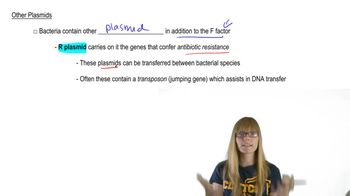
Plasmids are small, circular DNA molecules that exist independently of chromosomal DNA in bacteria. They often carry genes that confer beneficial traits, such as antibiotic resistance or metabolic capabilities. During conjugation, plasmids can be transferred from donor to recipient bacteria via the conjugation pilus, facilitating the spread of these advantageous traits and contributing to the genetic diversity and adaptability of bacterial populations.