
A healthy couple with a history of three previous spontaneous abortions has just had a child with cri-du-chat syndrome, a disorder caused by a terminal deletion of chromosome 5. Their physician orders karyotype analysis of both parents and of the child. The karyotype results for chromosomes 5 and 12 are shown here. What is the approximate probability that the next child of this couple will have cri-du-chat syndrome?
Verified step by step guidance
1
Step 1: Understand the genetic basis of cri-du-chat syndrome. This syndrome is caused by a terminal deletion on the short arm of chromosome 5 (5p). The deletion can occur spontaneously or be inherited from a parent with a chromosomal rearrangement, such as a balanced translocation.
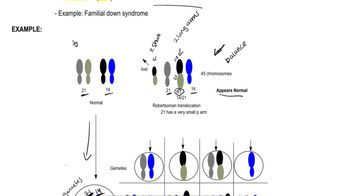
Step 2: Analyze the karyotype results provided in the problem. Determine if one of the parents carries a balanced translocation involving chromosome 5. A balanced translocation means that no genetic material is lost or gained, but the rearrangement can lead to unbalanced gametes during meiosis.
Step 3: Calculate the possible gametes produced by the parent with the balanced translocation. Use the concept of segregation during meiosis to determine the proportion of gametes that would result in a child with cri-du-chat syndrome. For example, if the parent has a balanced translocation, there are four possible outcomes for the gametes: normal, balanced translocation, unbalanced with deletion, and unbalanced with duplication.
Step 4: Determine the probability of the child inheriting the unbalanced gamete that leads to cri-du-chat syndrome. This probability depends on the segregation pattern of the translocation. Typically, if a parent has a balanced translocation, the probability of passing on an unbalanced gamete is 1/4.
Step 5: Combine the probability of inheriting the unbalanced gamete with any additional factors, such as the likelihood of spontaneous deletions, if relevant. This will give the approximate probability of the next child having cri-du-chat syndrome.
Verified video answer for a similar problem:
This video solution was recommended by our tutors as helpful for the problem above
Video duration:
1m
Play a video:
Was this helpful?
Key Concepts
Here are the essential concepts you must grasp in order to answer the question correctly.
Cri-du-chat Syndrome
Cri-du-chat syndrome is a genetic disorder caused by a deletion of a portion of chromosome 5, specifically at the 5p15.2 locus. This condition is characterized by distinctive features such as a high-pitched cry resembling that of a cat, developmental delays, and various physical abnormalities. Understanding the genetic basis of this syndrome is crucial for assessing the risk of recurrence in future pregnancies.
Karyotype analysis is a laboratory technique used to visualize an individual's chromosomes, allowing for the identification of chromosomal abnormalities such as deletions, duplications, or translocations. In this case, analyzing the karyotypes of the parents and the affected child can help determine whether the deletion is de novo (new) or inherited, which is essential for calculating the probability of recurrence in future offspring.
Recurrence risk refers to the probability that a genetic disorder will occur again in future offspring of the same parents. This risk can be influenced by factors such as the mode of inheritance, parental carrier status, and the presence of chromosomal abnormalities. In the context of cri-du-chat syndrome, understanding whether the deletion is inherited or new will significantly impact the estimated risk for subsequent children.