Understand the concept of random mutations: Mutations are changes in the DNA sequence that occur without a specific purpose or direction. They are not influenced by the needs of the organism but arise due to errors in DNA replication, environmental factors, or spontaneous chemical changes.
Review the Luria-Delbrück fluctuation test: This classic experiment demonstrated that mutations occur randomly rather than as a response to environmental pressures. In the experiment, bacterial cultures were exposed to a virus, and the distribution of resistant colonies was analyzed.
Analyze the results of the fluctuation test: If mutations occurred in response to the virus, all bacterial cultures would show similar numbers of resistant colonies. However, the experiment showed a wide variation in the number of resistant colonies across cultures, supporting the idea that mutations occurred randomly before exposure to the virus.
Understand the role of replica plating: This technique further confirmed the randomness of mutations. Bacteria were grown on a master plate, and colonies were transferred to plates containing antibiotics. Resistant colonies were found in the same positions on all plates, indicating that the mutations conferring resistance occurred before exposure to the antibiotic.
Connect the evidence to the concept of randomness: These experiments collectively demonstrate that mutations arise independently of environmental conditions, supporting the idea that mutations occur randomly rather than as a directed response to environmental challenges.
Verified video answer for a similar problem:
This video solution was recommended by our tutors as helpful for the problem above
Video duration:
29s
Play a video:
Was this helpful?
Key Concepts
Here are the essential concepts you must grasp in order to answer the question correctly.
Gene Mutations
Gene mutations are changes in the DNA sequence of an organism's genome. These alterations can occur due to various factors, including errors during DNA replication, environmental influences, or spontaneous chemical changes. Understanding the nature of these mutations is crucial for studying genetic variation and evolution.
The randomness of mutations refers to the idea that mutations occur without any specific direction or purpose, often influenced by chance rather than adaptive needs. This concept is supported by statistical analyses showing that mutations arise at a consistent rate across different genes and organisms, indicating that they are not selectively induced.
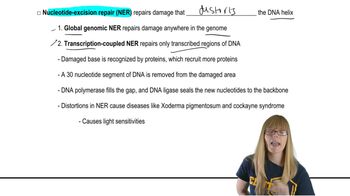
DNA repair mechanisms are cellular processes that correct damage to the DNA molecule, ensuring genomic stability. These mechanisms, such as nucleotide excision repair and mismatch repair, help maintain the integrity of the genetic material. Understanding these processes is essential for comprehending how cells manage mutations and their potential consequences.