
Textbook Question
What evidence supports the concept that humans share substantial sequence similarities and gene functional similarities with model organisms?
445
views

 Verified step by step guidance
 02:48
02:48
 09:28 09:28
What evidence supports the concept that humans share substantial sequence similarities and gene functional similarities with model organisms?
How can proteomics identify differences between the number of protein-coding genes predicted for a genome and the number of proteins expressed by a genome?
Write a short essay that explains how recombinant DNA techniques were used to identify and study genes compared to how modern genomic techniques have revolutionized the cloning and analysis of genes.
In the discussion we focused on the analysis of genomes, transcriptomes, and proteomes and considered important applications and findings from these endeavors. At the same time, we found many opportunities to consider the methods and reasoning by which much of this information was acquired. From the explanations given in the chapter, what answers would you propose to the following fundamental questions?
How have microarrays demonstrated that, although all cells of an organism have the same genome, some genes are expressed in almost all cells, whereas other genes show cell- and tissue-specific expression?
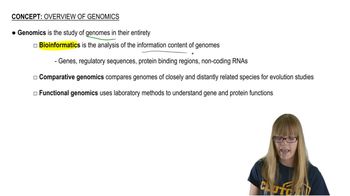
What is functional genomics? How does it differ from comparative genomics?
How do we know if a genomic DNA sequence contains a protein-coding gene?