Why are most recombinant human proteins produced in animal or plant hosts instead of bacterial host cells?
Verified step by step guidance
1
Understand the concept of recombinant protein production: Recombinant proteins are produced by inserting a gene encoding the desired protein into a host organism, which then expresses the protein. The choice of host organism depends on factors like protein complexity, post-translational modifications, and yield.
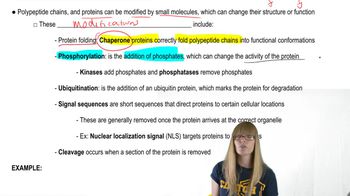
Recognize the limitations of bacterial host cells: Bacteria, such as Escherichia coli, are commonly used for recombinant protein production. However, they lack the cellular machinery to perform post-translational modifications (e.g., glycosylation, phosphorylation) that are essential for the proper function of many human proteins.
Consider the advantages of animal hosts: Animal cells, such as mammalian cell lines, have the necessary machinery to perform complex post-translational modifications. This makes them suitable for producing human proteins that require these modifications for biological activity.
Evaluate the role of plant hosts: Plant cells can also perform some post-translational modifications and are used for producing recombinant proteins. They offer advantages such as scalability, lower production costs, and reduced risk of contamination with human pathogens.
Conclude why bacterial hosts are less suitable: Since bacterial cells cannot replicate the complexity of human protein modifications, animal or plant hosts are preferred for producing recombinant human proteins to ensure proper folding, functionality, and therapeutic efficacy.
Verified video answer for a similar problem:
This video solution was recommended by our tutors as helpful for the problem above
Video duration:
1m
Play a video:
Was this helpful?
Key Concepts
Here are the essential concepts you must grasp in order to answer the question correctly.
Post-Translational Modifications
Recombinant proteins often require specific post-translational modifications, such as glycosylation, phosphorylation, or proper folding, to function correctly. Animal and plant cells have the necessary cellular machinery to perform these modifications, while bacterial cells typically lack the ability to modify proteins in the same way, leading to functional discrepancies.
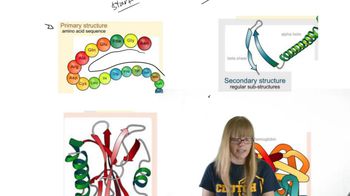
The correct folding and assembly of proteins are crucial for their biological activity. Eukaryotic cells, such as those from animals and plants, provide a more complex environment that supports proper protein folding and assembly, whereas bacterial systems may lead to misfolded proteins or inclusion bodies, which are inactive aggregates.
Eukaryotic systems often allow for higher yields of properly folded and functional proteins compared to bacterial systems. Additionally, animal and plant cells can secrete proteins into the culture medium, simplifying purification processes, while bacterial cells may require more complex extraction methods to isolate the desired proteins.