You have discovered a new species of archaea from a hot spring in Yellowstone National Park. How would your strategy change if you were unable to grow the strain in culture?
Verified step by step guidance
1
Step 1: Begin by extracting DNA directly from the environmental sample containing the archaea. Use techniques such as filtration or centrifugation to isolate cells before lysing them to release their genetic material.
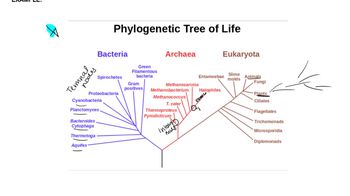
Step 2: Amplify the DNA using polymerase chain reaction (PCR) with primers designed to target conserved regions of archaeal genes, such as the 16S rRNA gene. This will help identify the species and its phylogenetic placement.
Step 3: Sequence the amplified DNA using high-throughput sequencing methods (e.g., Illumina or Nanopore sequencing) to obtain the genetic information of the strain. Ensure proper quality control and assembly of the sequence data.
Step 4: Analyze the genomic data using bioinformatics tools to identify functional genes, metabolic pathways, and adaptations to the hot spring environment. Compare the genome to known archaeal genomes to infer ecological roles and evolutionary relationships.
Step 5: If functional studies are needed, consider heterologous expression of genes in a model organism or synthetic biology approaches to study the strain's unique features without requiring culture.
Verified video answer for a similar problem:
This video solution was recommended by our tutors as helpful for the problem above
Video duration:
2m
Play a video:
Was this helpful?
Key Concepts
Here are the essential concepts you must grasp in order to answer the question correctly.
Culture Techniques
Culture techniques involve methods used to grow microorganisms in controlled environments. These techniques are essential for studying the physiology, genetics, and biochemistry of organisms. If a strain cannot be cultured, researchers must rely on alternative methods to study its characteristics, which can limit the understanding of its biology.
Metagenomics is the study of genetic material recovered directly from environmental samples. This approach allows scientists to analyze the genomes of organisms that cannot be cultured in the lab. By using metagenomics, researchers can gain insights into the diversity and functional potential of unculturable species, such as the newly discovered archaea.
Phylogenetic Analysis
Phylogenetic analysis involves studying the evolutionary relationships among various biological species based on genetic information. This method can help identify the new species' relatives and its place in the tree of life, even if it cannot be cultured. Understanding these relationships is crucial for classifying the organism and predicting its ecological roles.