Arizona’s Pick 5 In one of Arizona’s lotteries, balls are numbered 1–35. Five balls are selected randomly, without replacement. The order in which the balls are selected does not matter. To win, your numbers must match the five selected. Determine your probability of winning Arizona’s Pick 5 with one ticket.
Table of contents
- 1. Intro to Stats and Collecting Data1h 14m
- 2. Describing Data with Tables and Graphs1h 55m
- 3. Describing Data Numerically2h 5m
- 4. Probability2h 16m
- 5. Binomial Distribution & Discrete Random Variables3h 6m
- 6. Normal Distribution and Continuous Random Variables2h 11m
- 7. Sampling Distributions & Confidence Intervals: Mean3h 23m
- Sampling Distribution of the Sample Mean and Central Limit Theorem19m
- Distribution of Sample Mean - Excel23m
- Introduction to Confidence Intervals15m
- Confidence Intervals for Population Mean1h 18m
- Determining the Minimum Sample Size Required12m
- Finding Probabilities and T Critical Values - Excel28m
- Confidence Intervals for Population Means - Excel25m
- 8. Sampling Distributions & Confidence Intervals: Proportion1h 25m
- 9. Hypothesis Testing for One Sample3h 29m
- 10. Hypothesis Testing for Two Samples4h 50m
- Two Proportions1h 13m
- Two Proportions Hypothesis Test - Excel28m
- Two Means - Unknown, Unequal Variance1h 3m
- Two Means - Unknown Variances Hypothesis Test - Excel12m
- Two Means - Unknown, Equal Variance15m
- Two Means - Unknown, Equal Variances Hypothesis Test - Excel9m
- Two Means - Known Variance12m
- Two Means - Sigma Known Hypothesis Test - Excel21m
- Two Means - Matched Pairs (Dependent Samples)42m
- Matched Pairs Hypothesis Test - Excel12m
- 11. Correlation1h 24m
- 12. Regression1h 50m
- 13. Chi-Square Tests & Goodness of Fit2h 21m
- 14. ANOVA1h 57m
4. Probability
Basic Concepts of Probability
Problem 5.3.19d
Textbook Question
"Derivatives
In finance, a derivative is a financial asset whose value is determined (derived) from a bundle of various assets, such as mortgages. Suppose a randomly selected mortgage has a probability of 0.01 of default.
d. In part (b), we made the assumption that the likelihood of default is independent. Do you believe this is a reasonable assumption? Explain."
Verified step by step guidance1
Step 1: Understand the concept of independence in probability. Two events are independent if the occurrence of one does not affect the probability of the other occurring.
Step 2: In the context of mortgage defaults, independence means that whether one mortgage defaults does not influence the likelihood of another mortgage defaulting.
Step 3: Consider real-world factors that might affect mortgage defaults, such as economic conditions, housing market trends, or borrower characteristics, which could create dependencies between defaults.
Step 4: Reflect on whether these factors could cause defaults to be correlated, meaning the assumption of independence might not hold true in practice.
Step 5: Conclude by explaining that assuming independence simplifies modeling but may not be fully realistic because defaults can be influenced by common external factors, leading to potential dependence.
Verified video answer for a similar problem:This video solution was recommended by our tutors as helpful for the problem above
Video duration:
2mPlay a video:
Was this helpful?
Key Concepts
Here are the essential concepts you must grasp in order to answer the question correctly.
Probability of Default
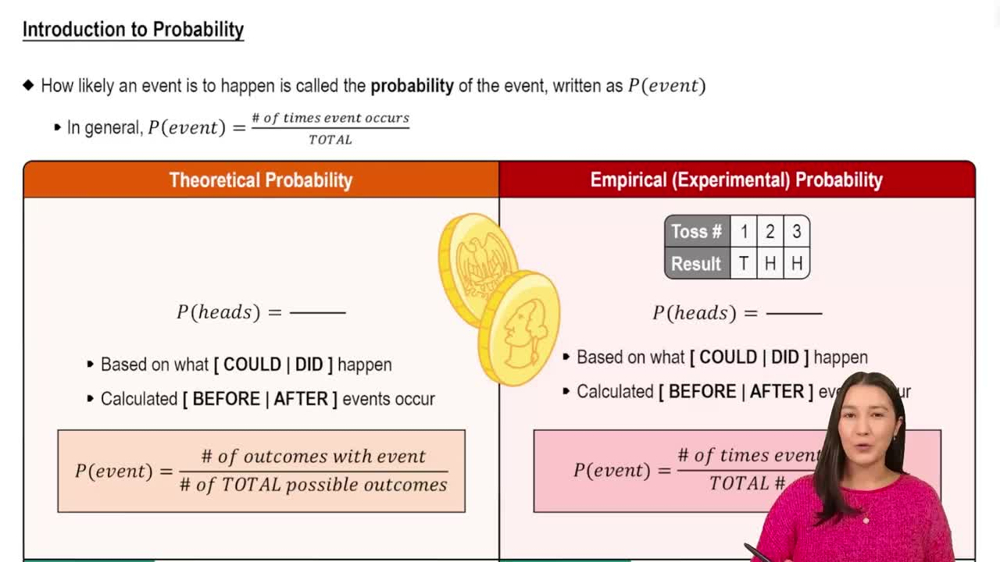
The probability of default is the chance that a borrower fails to meet their debt obligations. In this context, it quantifies the risk that a mortgage will default, given as 0.01 or 1%. Understanding this helps assess the risk embedded in financial derivatives based on these mortgages.
Recommended video:
Introduction to Probability
Independence of Events
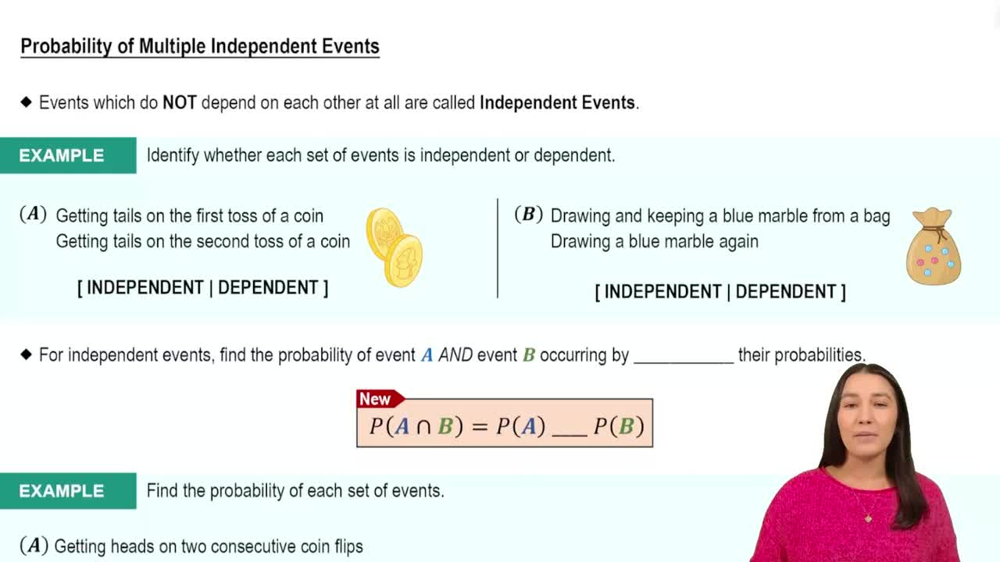
Independence means the occurrence of one event does not affect the probability of another. Assuming mortgage defaults are independent implies one default does not influence another, which simplifies modeling but may overlook real-world factors like economic conditions causing correlated defaults.
Recommended video:
Probability of Multiple Independent Events
Correlation and Systemic Risk
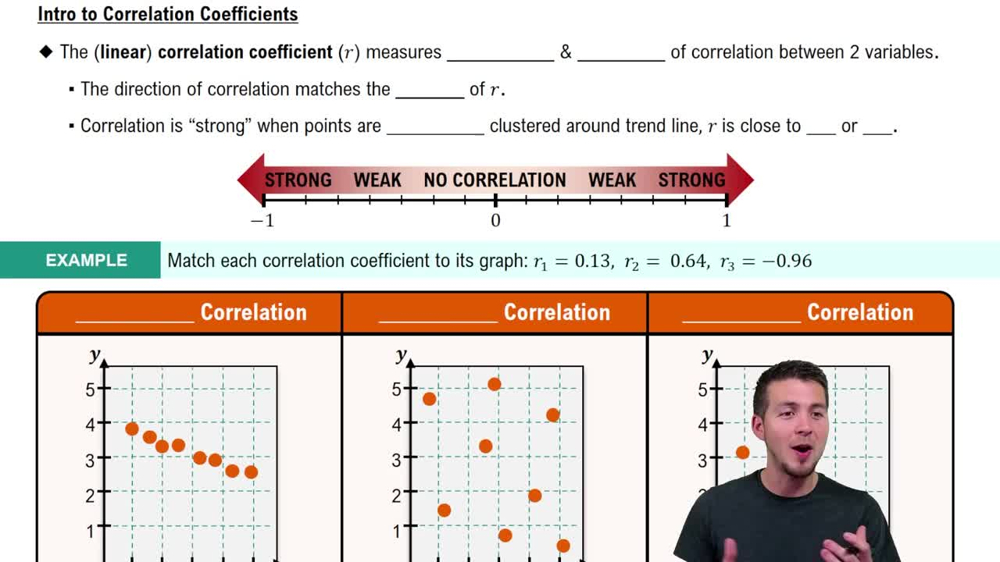
Correlation measures how events move together; in finance, defaults can be correlated due to shared economic factors. Systemic risk arises when many defaults happen simultaneously, violating independence assumptions and impacting the accuracy of risk assessments in derivatives pricing.
Recommended video:
Guided course
Correlation Coefficient
Watch next
Master Introduction to Probability with a bite sized video explanation from Patrick
Start learningRelated Videos
Related Practice
Textbook Question
4
views