How do we know how methylation of promoters silences gene expression?
Verified step by step guidance
1
Understand the concept of DNA methylation: DNA methylation involves the addition of a methyl group (CH₃) to the cytosine base in CpG dinucleotides, which are regions of DNA where a cytosine nucleotide is followed by a guanine nucleotide. This modification is a key epigenetic mechanism that regulates gene expression.
Recognize the role of promoters in gene expression: Promoters are sequences of DNA located upstream of a gene that serve as binding sites for transcription factors and RNA polymerase, enabling the initiation of transcription. Methylation of promoter regions can interfere with this process.
Learn how methylation silences gene expression: Methylation of CpG sites in promoter regions can prevent transcription factors from binding to the DNA. Additionally, methylated DNA can recruit proteins known as methyl-CpG-binding domain (MBD) proteins, which further inhibit transcription by forming repressive chromatin structures.
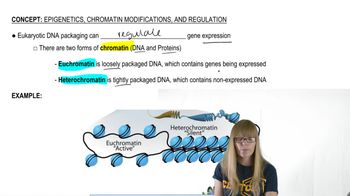
Understand the impact on chromatin structure: Methylation can lead to the recruitment of histone-modifying enzymes, such as histone deacetylases (HDACs), which remove acetyl groups from histones. This results in tighter packing of chromatin, making the DNA less accessible to the transcriptional machinery.
Connect methylation to gene silencing in biological contexts: Methylation of promoters is a common mechanism in development, where specific genes are turned off in certain cell types. It is also observed in cancer, where hypermethylation of tumor suppressor gene promoters can lead to their silencing, contributing to uncontrolled cell growth.
Verified video answer for a similar problem:
This video solution was recommended by our tutors as helpful for the problem above
Video duration:
1m
Play a video:
Was this helpful?
Key Concepts
Here are the essential concepts you must grasp in order to answer the question correctly.
Epigenetics
Epigenetics refers to the study of heritable changes in gene expression that do not involve alterations to the underlying DNA sequence. These changes can be influenced by various factors, including environmental stimuli, and play a crucial role in development and disease. Understanding epigenetics is essential for grasping how genes can be turned on or off in response to different conditions.
DNA methylation is a biochemical process involving the addition of a methyl group to the DNA molecule, typically at cytosine bases in promoter regions. This modification can inhibit the binding of transcription factors and other proteins necessary for gene expression, effectively silencing the gene. Methylation patterns can be stable and passed on during cell division, influencing cellular function and identity.
Gene expression regulation encompasses the various mechanisms that control the timing and amount of gene product produced. This regulation is critical for normal development and cellular function, as it ensures that genes are expressed in the right cells at the right times. Epigenetic modifications, such as DNA methylation, are key players in this regulatory network, affecting how genes respond to internal and external signals.