You have just obtained 100 kb of genomic sequence from an as-yet-unsequenced mammalian genome. What are three methods you might use to identify potential genes in the 100 kb? What are the advantages and limitations of each method?
Table of contents
- 1. Introduction to Genetics51m
- 2. Mendel's Laws of Inheritance3h 37m
- 3. Extensions to Mendelian Inheritance2h 41m
- 4. Genetic Mapping and Linkage2h 28m
- 5. Genetics of Bacteria and Viruses1h 21m
- 6. Chromosomal Variation1h 48m
- 7. DNA and Chromosome Structure56m
- 8. DNA Replication1h 10m
- 9. Mitosis and Meiosis1h 34m
- 10. Transcription1h 0m
- 11. Translation58m
- 12. Gene Regulation in Prokaryotes1h 19m
- 13. Gene Regulation in Eukaryotes44m
- 14. Genetic Control of Development44m
- 15. Genomes and Genomics1h 50m
- 16. Transposable Elements47m
- 17. Mutation, Repair, and Recombination1h 6m
- 18. Molecular Genetic Tools19m
- 19. Cancer Genetics29m
- 20. Quantitative Genetics1h 26m
- 21. Population Genetics50m
- 22. Evolutionary Genetics29m
15. Genomes and Genomics
Sequencing the Genome
Problem 25a
Textbook Question
Whole-exome sequencing (WES) is helping physicians diagnose a genetic condition that has defied diagnosis by traditional means. The implication here is that exons in the nuclear genome are sequenced in the hopes that, by comparison with the genomes of nonaffected individuals, a diagnosis might be revealed.
What are the strengths and weaknesses of this approach?
Verified step by step guidance1
Step 1: Understand what Whole-Exome Sequencing (WES) entails. WES focuses on sequencing only the exons, which are the protein-coding regions of the nuclear genome. These regions represent about 1-2% of the entire genome but contain a large proportion of known disease-causing mutations.
Step 2: Identify the strengths of WES. Since it targets exons, WES is cost-effective compared to whole-genome sequencing, allows for easier data analysis due to smaller data size, and is highly useful for detecting mutations that alter protein sequences, which are often responsible for genetic diseases.
Step 3: Consider the weaknesses of WES. WES does not capture non-coding regions such as introns, regulatory elements, and intergenic regions, which can also harbor disease-causing variants. Additionally, WES may miss structural variants, copy number variations, and mutations in poorly captured or highly repetitive regions.
Step 4: Reflect on the diagnostic implications. WES can provide a diagnosis when traditional methods fail by identifying rare or novel coding mutations, but it may not detect all genetic causes due to its limited scope, so negative results do not rule out a genetic condition.
Step 5: Summarize by weighing the trade-offs. WES is a powerful tool for diagnosing many genetic disorders efficiently and economically, but its limitations mean that sometimes further testing, such as whole-genome sequencing or other molecular analyses, may be necessary for a comprehensive diagnosis.
Verified video answer for a similar problem:This video solution was recommended by our tutors as helpful for the problem above
Video duration:
1mPlay a video:
Was this helpful?
Key Concepts
Here are the essential concepts you must grasp in order to answer the question correctly.
Whole-Exome Sequencing (WES)
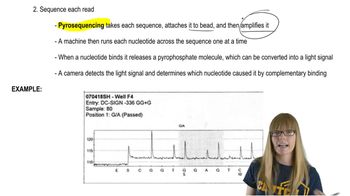
WES is a genomic technique that sequences all the protein-coding regions (exons) of genes in the nuclear genome. Since exons represent about 1-2% of the genome but harbor a majority of known disease-causing mutations, WES is efficient for identifying genetic variants linked to diseases. It is less costly and data-intensive than whole-genome sequencing but focuses only on coding regions.
Recommended video:
Guided course
Sequencing Overview
Strengths of WES in Genetic Diagnosis
WES allows for the detection of rare or novel mutations in coding regions that may explain undiagnosed genetic conditions. It is particularly useful when traditional tests fail, enabling comprehensive analysis of many genes simultaneously. This approach can identify single nucleotide variants, small insertions, and deletions that affect protein function.
Recommended video:
Guided course
Descriptive Genetics
Limitations of WES
WES does not capture non-coding regions, structural variants, or epigenetic changes that may contribute to disease. It may miss mutations in poorly covered exons or regions with complex sequences. Additionally, interpreting variants of uncertain significance can be challenging, and incidental findings unrelated to the condition may arise.
Recommended video:
Guided course
Sex-Linked Genes
Related Videos
Related Practice
Textbook Question
602
views
