The human melanocortin 1 receptor gene (MC1R) plays a major role in producing eumelanin, a black-brown pigment that helps determine hair color and skin color. Jonathan Rees and several colleagues (J. L. Rees et al., Am. J. Human Genet. 66(2000): 1351–1361) studied multiple MC1R alleles in African and European populations. Although this research found several MC1R alleles in African populations, MC1R alleles that decrease the production of eumelanin were rare. In contrast, several alleles decreasing eumelanin production were found in European populations. How can these results be explained by natural selection?
Verified step by step guidance
1
Identify the role of the MC1R gene in eumelanin production, which affects pigmentation in hair and skin.
Understand that eumelanin provides protection against ultraviolet (UV) radiation from the sun, which is more intense in equatorial regions like Africa.
Consider the evolutionary advantage of having higher eumelanin production in African populations, as it offers better protection against UV radiation, reducing the risk of skin damage and skin cancer.
Recognize that in European populations, where UV radiation is less intense, there is less selective pressure to maintain high eumelanin production, allowing alleles that decrease eumelanin to persist and even become more common.
Conclude that natural selection favors different MC1R alleles in different environments, leading to the observed differences in allele frequency between African and European populations.
Verified video answer for a similar problem:
This video solution was recommended by our tutors as helpful for the problem above
Video duration:
2m
Play a video:
Was this helpful?
Key Concepts
Here are the essential concepts you must grasp in order to answer the question correctly.
Natural Selection
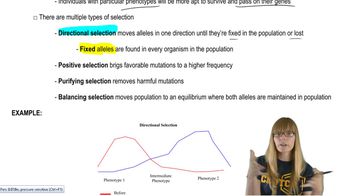
Natural selection is a fundamental mechanism of evolution, where individuals with traits better suited to their environment tend to survive and reproduce more than those with less advantageous traits. In the context of the MC1R gene, variations in eumelanin production can influence an individual's adaptability to different environmental conditions, such as UV radiation exposure, which affects skin cancer risk and vitamin D synthesis.
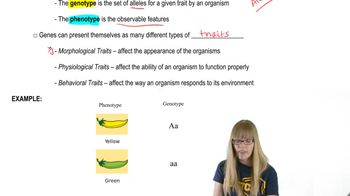
Eumelanin is a type of melanin pigment responsible for dark hair and skin coloration. The variation in MC1R alleles affects the amount of eumelanin produced, leading to different phenotypes. In populations exposed to high UV radiation, darker pigmentation (higher eumelanin) is favored for protection against skin damage, while lighter pigmentation may be advantageous in lower UV environments for better vitamin D synthesis.
Population genetics studies the distribution and change in frequency of alleles within populations. The findings of different MC1R alleles in African and European populations suggest that historical environmental pressures, such as UV radiation levels, have shaped the genetic diversity and allele frequencies in these groups, illustrating how local adaptations can lead to significant genetic differences across populations.