
Table of contents
- 1. Introduction to Genetics51m
- 2. Mendel's Laws of Inheritance3h 37m
- 3. Extensions to Mendelian Inheritance2h 41m
- 4. Genetic Mapping and Linkage2h 28m
- 5. Genetics of Bacteria and Viruses1h 21m
- 6. Chromosomal Variation1h 48m
- 7. DNA and Chromosome Structure56m
- 8. DNA Replication1h 10m
- 9. Mitosis and Meiosis1h 34m
- 10. Transcription1h 0m
- 11. Translation58m
- 12. Gene Regulation in Prokaryotes1h 19m
- 13. Gene Regulation in Eukaryotes44m
- 14. Genetic Control of Development44m
- 15. Genomes and Genomics1h 50m
- 16. Transposable Elements47m
- 17. Mutation, Repair, and Recombination1h 6m
- 18. Molecular Genetic Tools19m
- 19. Cancer Genetics29m
- 20. Quantitative Genetics1h 26m
- 21. Population Genetics50m
- 22. Evolutionary Genetics29m
11. Translation
Proteins
Problem 19
Textbook Question
Using sickle-cell anemia as an example, describe what is meant by a molecular or genetic disease. What are the similarities and dissimilarities between this type of a disorder and a disease caused by an invading microorganism?
Verified step by step guidance1
Step 1: Define a molecular or genetic disease by explaining that it is caused by mutations or alterations in the DNA sequence of a gene, which leads to abnormal protein function or production. Use sickle-cell anemia as an example, where a single nucleotide mutation in the hemoglobin gene causes the production of abnormal hemoglobin protein.
Step 2: Describe how this mutation affects the structure and function of hemoglobin, leading to the characteristic sickle shape of red blood cells, which impairs their ability to carry oxygen and causes various symptoms of the disease.
Step 3: Explain that diseases caused by invading microorganisms, such as bacteria or viruses, result from external infectious agents entering the body and disrupting normal physiological processes, unlike genetic diseases which originate from internal genetic defects.
Step 4: Compare similarities by noting that both types of diseases can cause significant health problems, may have genetic susceptibility factors, and can trigger immune responses in the body.
Step 5: Highlight dissimilarities by emphasizing that genetic diseases are inherited and present from birth due to DNA mutations, whereas infectious diseases are acquired through exposure to pathogens and are not inherited. Also, treatment approaches differ, with genetic diseases often requiring gene therapy or symptom management, while infectious diseases may be treated with antibiotics or antivirals.
Verified video answer for a similar problem:This video solution was recommended by our tutors as helpful for the problem above
Video duration:
4mPlay a video:
Was this helpful?
Key Concepts
Here are the essential concepts you must grasp in order to answer the question correctly.
Molecular or Genetic Disease
A molecular or genetic disease arises from mutations or alterations in an individual's DNA that affect the structure or function of proteins. These diseases are inherited or occur due to spontaneous genetic changes, leading to abnormal cellular processes, as seen in sickle-cell anemia where a mutation in the hemoglobin gene causes defective red blood cells.
Recommended video:
Guided course
Descriptive Genetics
Sickle-Cell Anemia as a Genetic Disorder
Sickle-cell anemia is caused by a single point mutation in the beta-globin gene, resulting in abnormal hemoglobin (HbS). This causes red blood cells to become rigid and sickle-shaped, impairing oxygen transport and leading to symptoms like pain and anemia. It exemplifies how a single genetic change can have systemic effects.
Recommended video:
Guided course
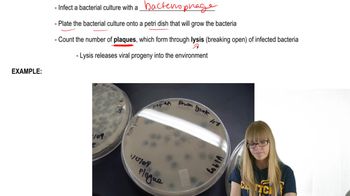
Plaques and Experiments
Differences and Similarities Between Genetic Diseases and Infectious Diseases
Genetic diseases originate from internal DNA mutations and are inherited or spontaneous, while infectious diseases result from external pathogens like bacteria or viruses invading the body. Both can cause cellular dysfunction and symptoms, but genetic diseases are not contagious, whereas infectious diseases can spread between individuals.
Recommended video:
Guided course
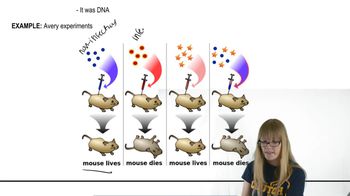
History and Experiments
Related Videos
Related Practice
Textbook Question
Early detection and adherence to a strict dietary regimen have prevented much of the intellectual disability that used to occur in those with phenylketonuria (PKU). Affected individuals now often lead normal lives and have families. For various reasons, such individuals tend to adhere less rigorously to their diet as they get older. Predict the effect that mothers with PKU who neglect their diets might have on newborns.
489
views
