The purpose of polymerase chain reaction is to do what?
Table of contents
- 1. Introduction to Genetics51m
- 2. Mendel's Laws of Inheritance3h 37m
- 3. Extensions to Mendelian Inheritance2h 41m
- 4. Genetic Mapping and Linkage2h 28m
- 5. Genetics of Bacteria and Viruses1h 21m
- 6. Chromosomal Variation1h 48m
- 7. DNA and Chromosome Structure56m
- 8. DNA Replication1h 10m
- 9. Mitosis and Meiosis1h 34m
- 10. Transcription1h 0m
- 11. Translation58m
- 12. Gene Regulation in Prokaryotes1h 19m
- 13. Gene Regulation in Eukaryotes44m
- 14. Genetic Control of Development44m
- 15. Genomes and Genomics1h 50m
- 16. Transposable Elements47m
- 17. Mutation, Repair, and Recombination1h 6m
- 18. Molecular Genetic Tools19m
- 19. Cancer Genetics29m
- 20. Quantitative Genetics1h 26m
- 21. Population Genetics50m
- 22. Evolutionary Genetics29m
18. Molecular Genetic Tools
Genetic Cloning
Problem 1c
Textbook Question
How has DNA-sequencing technology evolved in response to the emerging needs of genome scientists?
Verified step by step guidance1
Step 1: Understand the initial state of DNA sequencing technology, starting with Sanger sequencing, which was the first widely used method and provided relatively low-throughput, accurate sequencing of short DNA fragments.
Step 2: Recognize the limitations of early sequencing methods, such as low speed, high cost, and limited scalability, which created a need for faster and more cost-effective technologies as genome projects expanded.
Step 3: Explore the development of next-generation sequencing (NGS) technologies, which increased throughput dramatically by allowing millions of DNA fragments to be sequenced simultaneously, reducing cost and time per genome.
Step 4: Consider the emergence of third-generation sequencing technologies, which focus on sequencing single molecules of DNA in real-time, providing longer read lengths and the ability to detect epigenetic modifications, thus addressing challenges in genome assembly and structural variation detection.
Step 5: Reflect on how these technological advancements have been driven by the needs of genome scientists for higher accuracy, speed, cost efficiency, and the ability to analyze complex genomic features, enabling large-scale projects like the Human Genome Project and personalized medicine.
Verified video answer for a similar problem:This video solution was recommended by our tutors as helpful for the problem above
Video duration:
1mPlay a video:
Was this helpful?
Key Concepts
Here are the essential concepts you must grasp in order to answer the question correctly.
Advancements in DNA Sequencing Technologies
DNA sequencing has evolved from first-generation methods like Sanger sequencing to high-throughput next-generation sequencing (NGS) and third-generation single-molecule sequencing. These advancements have increased speed, accuracy, and reduced costs, enabling large-scale genome projects and detailed genetic analysis.
Recommended video:
Guided course
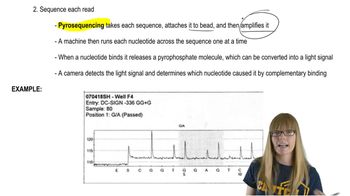
Sequencing Overview
Demand for High-Throughput and Cost-Effective Sequencing
As genome scientists sought to sequence entire genomes quickly and affordably, sequencing technologies adapted to process millions of DNA fragments simultaneously. This shift addressed the need for large data volumes, facilitating studies in population genetics, personalized medicine, and evolutionary biology.
Recommended video:
Guided course
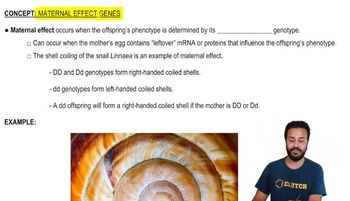
Maternal Effect
Integration of Bioinformatics and Data Analysis
The explosion of sequencing data required advanced computational tools to store, analyze, and interpret genetic information. Bioinformatics has become essential for managing sequencing outputs, enabling genome assembly, variant detection, and functional annotation critical to modern genomics research.
Recommended video:
Guided course
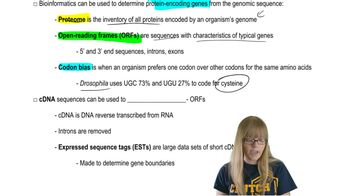
Bioinformatics
Related Videos
Related Practice
Multiple Choice
744
views
2
rank