Heart disease is currently the most common cause of death worldwide. How can people reduce the risk of heart disease?
Table of contents
- 1. Science of Nutrition1h 52m
- 2. Tools for Healthful Eating1h 51m
- 3. The Human Body & Digestion2h 7m
- 4. Carbohydrates3h 11m
- 5. Lipids2h 31m
- 6. Proteins2h 16m
- 7. Vitamins2h 20m
- 8. Water and Minerals2h 55m
- Water45m
- Introduction to Minerals9m
- Major Mineral: Sodium and Potassium18m
- Hypertension and Minerals12m
- Major Mineral: Calcium and Phosphorus21m
- Osteoporosis: Minerals and Bone Health14m
- Major Mineral: Chloride, Magnesium, & Sulfur16m
- Trace minerals: Iron and Copper14m
- Trace minerals: Fluoride and Iodine9m
- Other Trace Minerals13m
- 9. Alcohol57m
- 10. Energy Balance: Body Weight, Obesity, & Eating Disorders3h 7m
- 11. Nutrition & Fitness1h 7m
- 12. Food Safety & Regulation2h 3m
- 13. Food Insecurity in the US and the World37m
- 15. Nutrition: Toddlers to Late Adulthood42m
5. Lipids
Cardiovascular Disease
Struggling with Nutrition?
Join thousands of students who trust us to help them ace their exams!Watch the first videoMultiple Choice
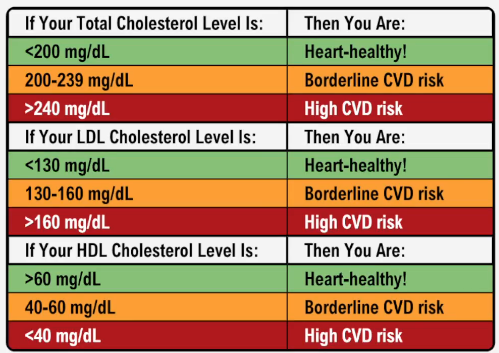
John recently had his blood cholesterol levels checked. His total cholesterol was 225 mg/dL, his LDL cholesterol was 155 mg/dL, and his HDL cholesterol was 35 mg/dL. Based on the cholesterol classification table below, which of the following statements most accurately describes John's cholesterol status?

A
John's total cholesterol is considered fabulous, but his LDL and HDL levels are borderline high.
B
John's LDL cholesterol is too high, but his HDL is in good range, so his overall cholesterol health is balanced.
C
John's total cholesterol & LDL cholesterol are borderline high while his HDL cholesterol is too low, indicating a higher risk for cardiovascular disease.
D
John's HDL cholesterol is good, which compensates for his slightly elevated LDL, so he's at low risk for CVD.
Verified step by step guidance1
Step 1: Analyze John's total cholesterol level. According to the table, a total cholesterol level of 225 mg/dL falls within the range of 200-239 mg/dL, which is classified as 'Borderline CVD risk.'
Step 2: Evaluate John's LDL cholesterol level. The table indicates that an LDL cholesterol level of 155 mg/dL falls within the range of 130-160 mg/dL, which is also classified as 'Borderline CVD risk.'
Step 3: Assess John's HDL cholesterol level. The table shows that an HDL cholesterol level of 35 mg/dL falls below 40 mg/dL, which is classified as 'High CVD risk.'
Step 4: Combine the classifications. John's total cholesterol and LDL cholesterol are both borderline high, while his HDL cholesterol is too low, indicating a higher risk for cardiovascular disease.
Step 5: Conclude that the most accurate statement based on the data is: 'John's total cholesterol & LDL cholesterol are borderline high while his HDL cholesterol is too low, indicating a higher risk for cardiovascular disease.'
Watch next
Master Introduction to Cardiovascular Disease with a bite sized video explanation from Bruce Bryan
Start learningRelated Videos
Related Practice
Multiple Choice
Cardiovascular Disease practice set