Why is a random mutation more likely to be deleterious than beneficial?
Verified step by step guidance
1
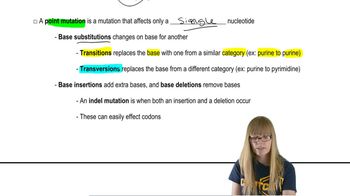
Understand that mutations are changes in the DNA sequence that can affect the function of genes and proteins.
Recognize that most biological systems have evolved to be well-adapted to their environments, so their current genetic makeup is generally optimized for survival and reproduction.
Consider that a random mutation is more likely to disrupt a well-functioning gene or protein rather than improve it, because the existing system is already fine-tuned.
Realize that deleterious mutations often impair protein structure or function, leading to reduced fitness, while beneficial mutations that improve function are rare and require very specific changes.
Conclude that the probability of a mutation being harmful is higher than it being helpful due to the complexity and optimization of biological systems.
Verified video answer for a similar problem:
This video solution was recommended by our tutors as helpful for the problem above
Video duration:
1m
Play a video:
Was this helpful?
Key Concepts
Here are the essential concepts you must grasp in order to answer the question correctly.
Random Mutation
A random mutation is a spontaneous change in the DNA sequence that occurs without a specific direction or purpose. These mutations can affect genes in various ways, often altering protein function or regulation unpredictably.
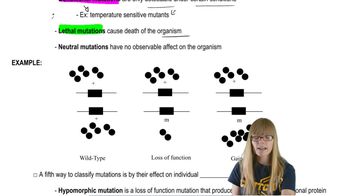
Deleterious mutations negatively impact an organism's fitness by disrupting normal biological functions, while beneficial mutations improve fitness or adaptation. Because biological systems are usually well-optimized, most random changes tend to harm rather than help.
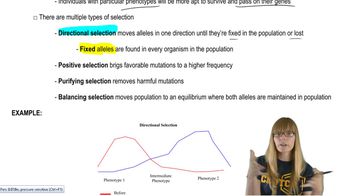
Natural selection acts on mutations by favoring beneficial changes and removing harmful ones over generations. Since beneficial mutations are rare, most random mutations are either neutral or deleterious, making harmful effects more common in the short term.