Three of the following are evidence that charophytes are the closest algal relatives of plants. Select the exception. a. Similar sperm structure b. The presence of chloroplasts c. Similarities in cell wall formation during cell division d. Genetic similarities in chloroplasts
Verified step by step guidance
1
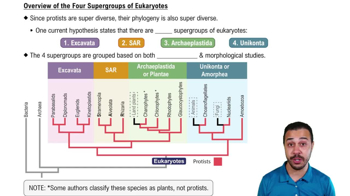
Understand the relationship between charophytes and plants. Charophytes are a group of green algae that share several characteristics with land plants, suggesting a close evolutionary relationship.
Identify the characteristics that are commonly used to establish evolutionary relationships. These include structural similarities, genetic similarities, and biochemical pathways.
Examine each option provided in the problem: a. similar sperm structure, b. the presence of chloroplasts, c. similarities in cell wall formation during cell division, d. genetic similarities in chloroplasts.
Consider which of these characteristics are shared specifically between charophytes and land plants, and which might be more broadly shared among other algae as well.
Determine the exception by identifying the characteristic that is not uniquely indicative of a close relationship between charophytes and land plants, but rather a common feature among many algae.
Verified video answer for a similar problem:
This video solution was recommended by our tutors as helpful for the problem above
Video duration:
3m
Play a video:
Was this helpful?
Key Concepts
Here are the essential concepts you must grasp in order to answer the question correctly.
Charophytes
Charophytes are a group of green algae considered the closest relatives to land plants. They share several key features with plants, such as similar reproductive structures and genetic traits, which provide evidence for their close evolutionary relationship. Understanding charophytes helps in studying the transition from aquatic to terrestrial life in plant evolution.
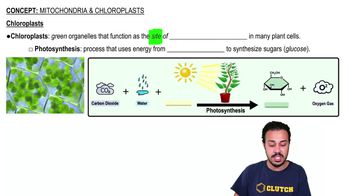
Chloroplasts are organelles found in plant and algal cells responsible for photosynthesis. They contain chlorophyll, which captures light energy to convert carbon dioxide and water into glucose and oxygen. The presence of chloroplasts in both charophytes and plants suggests a common ancestry, highlighting their evolutionary connection.
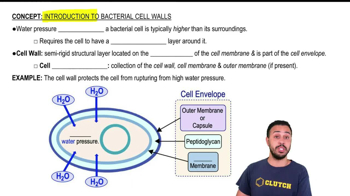
Cell wall formation during cell division involves the construction of a new cell wall between dividing cells. In both charophytes and plants, this process shows similarities, such as the use of phragmoplasts, which are structures that guide the formation of the cell plate. These similarities indicate a shared evolutionary mechanism in cell division.