In plants, which of the following are produced by meiosis? a. Haploid gametes b. Diploid gametes c. Haploid spores d. Diploid spores
Verified step by step guidance
1
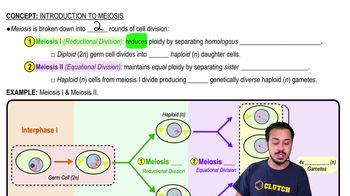
Understand the process of meiosis: Meiosis is a type of cell division that reduces the chromosome number by half, resulting in four haploid cells. This is crucial for sexual reproduction in plants and animals.
Identify the products of meiosis in plants: In plants, meiosis leads to the formation of spores, not gametes. These spores are haploid, meaning they contain half the number of chromosomes compared to the diploid parent cell.
Differentiate between gametes and spores: Gametes are reproductive cells (sperm and egg) that fuse during fertilization, while spores are units of asexual reproduction that can develop into a new organism without fertilization.
Recognize the ploidy level of spores: Since meiosis results in a reduction of chromosome number, the spores produced are haploid. This means they have one set of chromosomes.
Conclude which option is correct: Based on the understanding of meiosis and the nature of spores, haploid spores are produced by meiosis in plants.
Verified video answer for a similar problem:
This video solution was recommended by our tutors as helpful for the problem above
Video duration:
2m
Play a video:
Was this helpful?
Key Concepts
Here are the essential concepts you must grasp in order to answer the question correctly.
Meiosis
Meiosis is a type of cell division that reduces the chromosome number by half, resulting in four genetically distinct haploid cells. It is crucial for sexual reproduction and occurs in two stages: meiosis I and meiosis II. In plants, meiosis leads to the formation of spores, which are haploid cells that can develop into gametophytes.
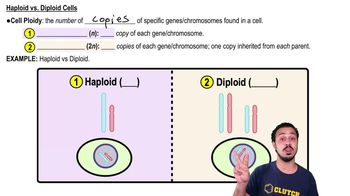
Haploid cells contain one set of chromosomes (n), while diploid cells have two sets (2n). In the context of plant reproduction, meiosis produces haploid spores, not gametes. These spores develop into gametophytes, which eventually produce haploid gametes through mitosis. Understanding the distinction between haploid and diploid is essential for grasping plant life cycles.
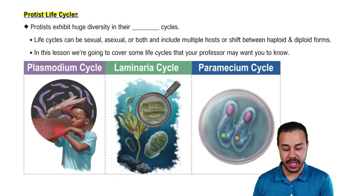
Plants undergo alternation of generations, a life cycle that includes both diploid and haploid stages. The diploid sporophyte undergoes meiosis to produce haploid spores, which grow into the haploid gametophyte. The gametophyte produces gametes through mitosis, which fuse during fertilization to form a new diploid sporophyte. This cycle highlights the role of meiosis in producing haploid spores, not gametes.