Journal Entries for Job Costing: Videos & Practice Problems
Journal Entries for Job Costing focus on recording how costs move through production using the general journal. A key foundation is the accounting equation, \( \text{Assets} = \text{Liabilities} + \text{Equity} \) . In job costing, asset accounts such as Raw Materials Inventory and Work in Process Inventory increase with debits and decrease with credits, while liability accounts such as Wages Payable increase with credits and decrease with debits. Debits are recorded before credits, and every debit must be matched by a credit.
For materials, purchasing raw materials is recorded by debiting Raw Materials Inventory and crediting cash, and using direct materials in production is recorded by debiting Work in Process Inventory and crediting raw materials inventory. For labor, direct labor assigned to a job is recorded by debiting Work in Process Inventory and crediting Wages Payable when employees will be paid later.
Indirect labor is not charged directly to a job. Instead, it is recorded by debiting Manufacturing Overhead and crediting Wages Payable. When wages are later paid, the liability is removed by debiting wages payable and crediting cash. These journal entries help separate direct materials, direct labor, and overhead so job costs are tracked accurately.
Account Types and the Accounting Equation: Review


Account Types and the Accounting Equation: Review
T-Accounts: Assets
T-Accounts: Assets
Journal Entries: Direct Materials Purchase and Use
Journal Entries: Direct Materials Purchase and Use
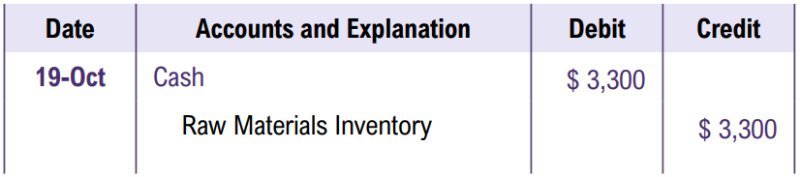
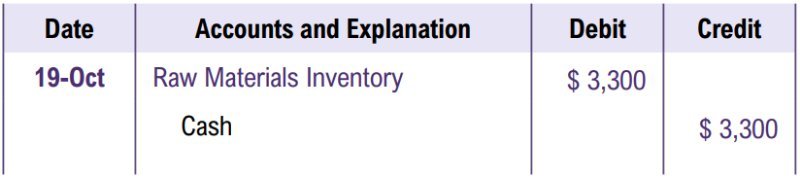
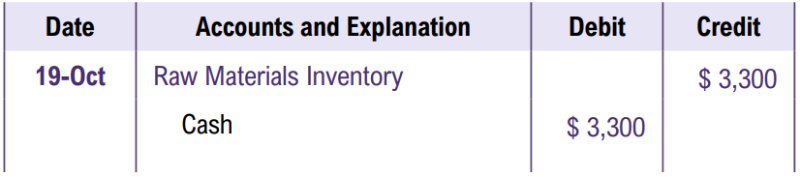
On October 19th, Zach’s Zippers purchased \$3,300 worth of metal and plastic materials to fill their storeroom for later use with cash. Which general journal properly records this transaction?

T-Accounts: Liabilities & Equity
T-Accounts: Liabilities & Equity
Zach’s Zippers’ employees are working on work in process inventory and Zach pays them at the end of week. What happens to each account?
Debit WIP Inventory; Credit Wages Payable
Credit WIP Inventory; Debit Wages Payable
Credit WIP Inventory; Credit Wages Payable
Debit WIP Inventory; Debit Wages Payable
Journal Entries: Direct and Indirect Labor
Journal Entries: Direct and Indirect Labor
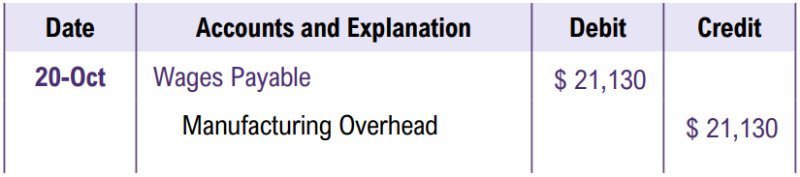
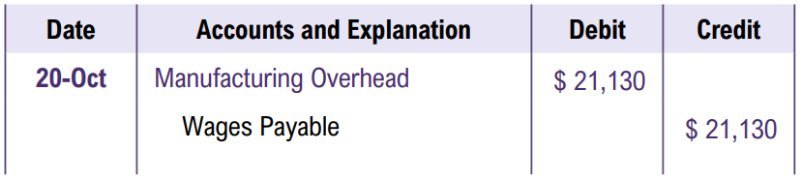
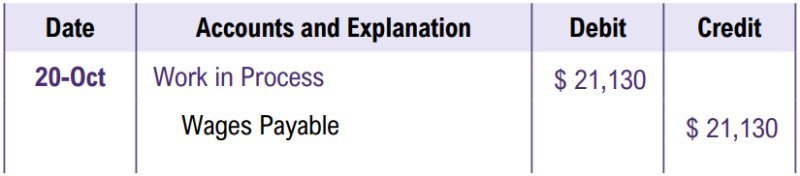
On October 20th, Zach’s Zippers’ indirect labor totals \$21,130 on time tickets. They will pay these employees later. Which general journal properly records this transaction?

Here's what students ask on this topic:
When raw materials are purchased in job costing, the journal entry involves increasing the Raw Materials Inventory account and decreasing cash or increasing accounts payable if purchased on credit. Specifically, you debit Raw Materials Inventory to show an increase in assets and credit Cash or Accounts Payable to reflect the outflow of cash or the liability incurred. This follows the accounting equation , where assets increase with debits and decrease with credits. For example, if \$570 of raw materials are purchased for cash, you debit Raw Materials Inventory for \$570 and credit Cash for \$570. This entry ensures accurate tracking of materials costs in the production process.
To record the use of direct materials in production, you transfer the cost from Raw Materials Inventory to Work in Process Inventory. This is done by debiting Work in Process Inventory to show an increase in assets related to production and crediting Raw Materials Inventory to show a decrease in raw materials. For example, if \$200 of raw materials are used, you debit Work in Process Inventory for \$200 and credit Raw Materials Inventory for \$200. This journal entry reflects the movement of materials into production and helps in accurately assigning costs to jobs.
Direct labor costs are recorded by debiting Work in Process Inventory and crediting Wages Payable. This entry increases the Work in Process Inventory account, reflecting labor costs added to production, and increases the liability account Wages Payable, indicating wages owed to employees. For example, if \$8,000 of direct labor is incurred but not yet paid, you debit Work in Process Inventory for \$8,000 and credit Wages Payable for \$8,000. This matches the accounting principle that liabilities increase with credits and assets increase with debits, ensuring labor costs are properly assigned to jobs.
Indirect labor costs are recorded by debiting Manufacturing Overhead and crediting Wages Payable. Unlike direct labor, indirect labor is not charged directly to a job but accumulated as overhead. For example, if \$5,400 of indirect labor is incurred, you debit Manufacturing Overhead for \$5,400 to increase overhead costs and credit Wages Payable for \$5,400 to recognize the liability. This entry helps separate overhead costs from direct job costs, which is essential for accurate job costing and later allocation of overhead to jobs.
In job costing journal entries, every debit must be matched by an equal credit to maintain the accounting equation . This means that for every increase or decrease recorded on one side, there is a corresponding and opposite entry on the other side. For example, when raw materials are purchased, Raw Materials Inventory is debited and Cash is credited for the same amount. This rule ensures that the accounting records remain balanced and accurate, which is fundamental for financial reporting and cost tracking.
Liabilities and equity accounts behave opposite to asset accounts in terms of debits and credits. For asset accounts, increases are recorded as debits and decreases as credits. However, for liabilities and equity, increases are recorded as credits and decreases as debits. For example, when wages payable (a liability) increases, it is credited, and when it decreases, it is debited. This difference aligns with the accounting equation and helps maintain balance in the accounts during job costing transactions.