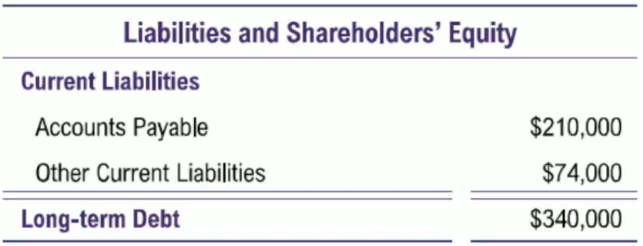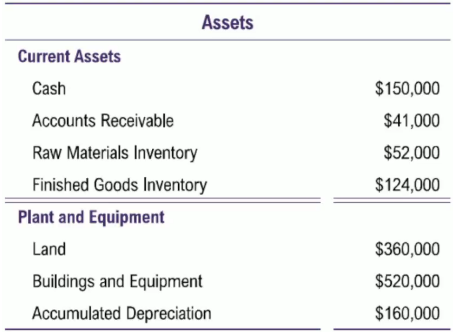
Creating a budgeted balance sheet is essential for estimating a company's financial position at the end of a fiscal year based on its budget. This projection includes assets, liabilities, and shareholder equity, allowing businesses to compare actual results against planned figures to evaluate budget implementation success. While assets often encompass numerous categories, liabilities tend to be fewer but still require careful consideration. It is important to note that not all liability types may be included in a budgeted balance sheet; only those that can be derived from existing budgets or provided by management are typically accounted for.
For liabilities, accounts payable represents amounts owed for resources purchased on credit. In the case of P+ Pottery, accounts payable arises solely from direct materials purchased on credit, which can be found in the direct materials budget. However, other businesses might need to reference multiple budgets if they purchase various resources or labor on credit. Additionally, other current liabilities, such as short-term loans or payables, must be identified, often requiring input from management or financial officers.
Once liabilities are determined, shareholder equity can be calculated using the fundamental accounting equation:
\( \text{Assets} = \text{Liabilities} + \text{Shareholder Equity} \).
Rearranging this, shareholder equity is found by subtracting liabilities from assets:
\( \text{Shareholder Equity} = \text{Assets} - \text{Liabilities} \).
For P+ Pottery, with total assets of \$321,295 and total liabilities of \$133,430, shareholder equity is calculated as:
\( 321,295 - 133,430 = 187,865 \).
This ensures the balance sheet balances, confirming the accuracy of the budgeted financial statements.
Completing the master budget involves integrating all revenue and cost projections, ensuring sufficient cash flow for disbursements, and preparing comprehensive financial documents. These documents serve as benchmarks for assessing whether the company meets its financial goals. Beyond this, budgets can be expanded to include various types and applications, such as setting performance standards for employees and guiding strategic decision-making. Mastering the construction and analysis of budgeted financial statements is a critical skill for effective financial planning and control.