
In a life cycle with alternation of generations, multicellular haploid forms alternate with a. Unicellular haploid forms b. Unicellular diploid forms c. Multicellular haploid forms d. Multicellular diploid forms
Verified step by step guidance
1
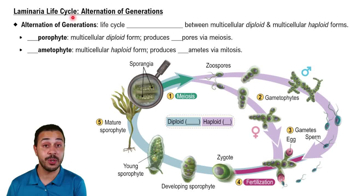
Understand the concept of alternation of generations: This is a reproductive cycle found in plants, algae, and some fungi, where there is a regular alternation between two distinct forms - one haploid and one diploid.
Identify the haploid and diploid stages: In alternation of generations, the haploid stage is known as the gametophyte, which produces gametes, and the diploid stage is known as the sporophyte, which produces spores.
Recognize the multicellular nature of these stages: Both the gametophyte and sporophyte stages are typically multicellular, meaning they consist of multiple cells working together.
Determine the correct alternation: Since the question asks about multicellular haploid forms alternating with another form, consider that the multicellular haploid gametophyte alternates with the multicellular diploid sporophyte.
Select the correct answer: Based on the understanding that multicellular haploid forms alternate with multicellular diploid forms, choose option d.
Verified video answer for a similar problem:
This video solution was recommended by our tutors as helpful for the problem above
Video duration:
1m
Play a video:
Was this helpful?
Key Concepts
Here are the essential concepts you must grasp in order to answer the question correctly.
Alternation of Generations
Alternation of generations is a biological process in which an organism alternates between two distinct forms: a multicellular haploid phase (gametophyte) and a multicellular diploid phase (sporophyte). This cycle is common in plants, algae, and some fungi, allowing for genetic diversity through sexual reproduction.
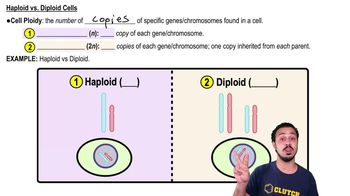
Haploid forms contain a single set of chromosomes (n), while diploid forms have two sets (2n). In the alternation of generations, the haploid gametophyte produces gametes, and the diploid sporophyte arises from the fusion of these gametes, leading to a new generation. Understanding these forms is crucial for grasping the life cycle dynamics.
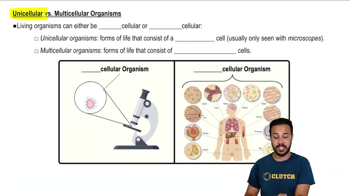
Multicellular organisms consist of multiple cells that work together, often forming complex structures. In the context of alternation of generations, both the haploid and diploid phases are multicellular, with the gametophyte and sporophyte representing different stages of the organism's life cycle, each with distinct roles and functions.