The hormone that helps plants respond to drought is: a. Auxin b. Abscisic acid c. Cytokinin d. Ethylene
Verified step by step guidance
1
Identify the main function of each hormone listed in the options: auxin, abscisic acid, cytokinin, and ethylene.
Auxin is primarily involved in cell elongation and growth, particularly in the shoots and roots.
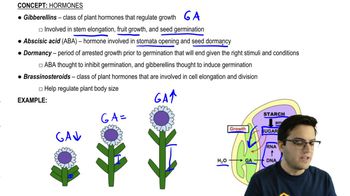
Abscisic acid is known for its role in stress responses, particularly in helping plants cope with drought by closing stomata to reduce water loss.
Cytokinin is mainly involved in cell division and growth, influencing the development of shoots and roots.
Ethylene is a hormone associated with fruit ripening and response to stress, but not specifically drought stress.
Verified video answer for a similar problem:
This video solution was recommended by our tutors as helpful for the problem above
Video duration:
3m
Play a video:
Was this helpful?
Key Concepts
Here are the essential concepts you must grasp in order to answer the question correctly.
Plant Hormones
Plant hormones, or phytohormones, are chemical substances that regulate various functions in plants, including growth, development, and responses to environmental stimuli. They play crucial roles in processes like cell division, flowering, and stress responses. Understanding plant hormones is essential for identifying how plants adapt to changes such as drought conditions.
Abscisic acid (ABA) is a plant hormone primarily involved in regulating plant responses to stress, particularly drought. It helps plants conserve water by inducing stomatal closure, reducing water loss through transpiration. ABA also plays a role in seed dormancy and germination, making it a key hormone in plant adaptation to adverse environmental conditions.
Drought response in plants involves physiological and biochemical changes that help minimize water loss and maintain cellular functions. Key strategies include stomatal closure, root growth alteration, and osmotic adjustment. Hormones like abscisic acid are crucial in signaling these responses, enabling plants to survive periods of water scarcity by conserving resources and maintaining homeostasis.