Plants experience a vast array of conditions that can alter their growth and development, including temperature and availability of water, nutrients, and light. They are also exposed to pollutants such as acid rain formed largely as a result of burning fossil fuels and volcanic eruptions. Acid rain can strip minerals and nutrients from the soil, and eat away the outer waxy layer of tissue that protects a plant. Acid rain is still a major environmental problem in certain regions. How does acid rain affect plant growth? Which meristem was likely affected in the chinaberry tree?
Verified step by step guidance
1
Understand the impact of acid rain on plant growth: Acid rain primarily affects plants by altering the soil pH, which can lead to nutrient deficiencies. It can also damage the protective waxy layer on leaves, making plants more susceptible to diseases and reducing their ability to photosynthesize effectively.
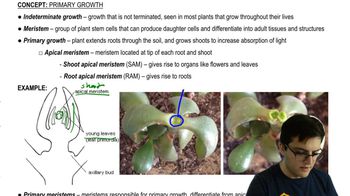
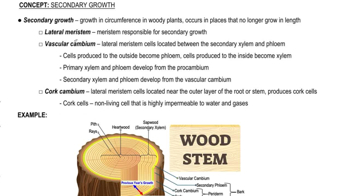
Identify the types of meristems in plants: Meristems are regions of active cell division in plants. The main types are apical meristems, which are found at the tips of roots and shoots, and lateral meristems, which are responsible for the growth in thickness of stems and roots.
Determine which meristem is likely affected by acid rain: Acid rain can impact the apical meristems by damaging the leaves and stems, which are crucial for the plant's vertical growth. This can lead to stunted growth and reduced ability to produce new leaves and flowers.
Consider the specific case of the chinaberry tree: If the chinaberry tree is exposed to acid rain, the apical meristems in the shoots are likely affected, as these are responsible for the tree's height and leaf production. Damage to these meristems can result in reduced growth and vitality.
Explore potential solutions or adaptations: Plants may adapt to acid rain by developing thicker cuticles or altering their root systems to better access nutrients. Understanding these adaptations can help in developing strategies to mitigate the effects of acid rain on plant growth.
Verified video answer for a similar problem:

This video solution was recommended by our tutors as helpful for the problem above
Video duration:
1m
Play a video:
Was this helpful?
Key Concepts
Here are the essential concepts you must grasp in order to answer the question correctly.
Acid Rain
Acid rain is precipitation with a lower pH than normal, caused by atmospheric pollution from sulfur dioxide and nitrogen oxides. These compounds react with water vapor to form sulfuric and nitric acids, which can strip essential nutrients from the soil and damage plant tissues, affecting growth and development.
Meristems are regions in plants where active cell division occurs, leading to growth. There are two main types: apical meristems, found at the tips of roots and shoots, and lateral meristems, responsible for thickness growth. Damage to meristems can hinder a plant's ability to grow and repair itself.
Acid rain affects plant growth by leaching essential nutrients from the soil, such as calcium and magnesium, and damaging the protective waxy cuticle on leaves. This can lead to reduced photosynthesis, stunted growth, and increased susceptibility to diseases and environmental stress.