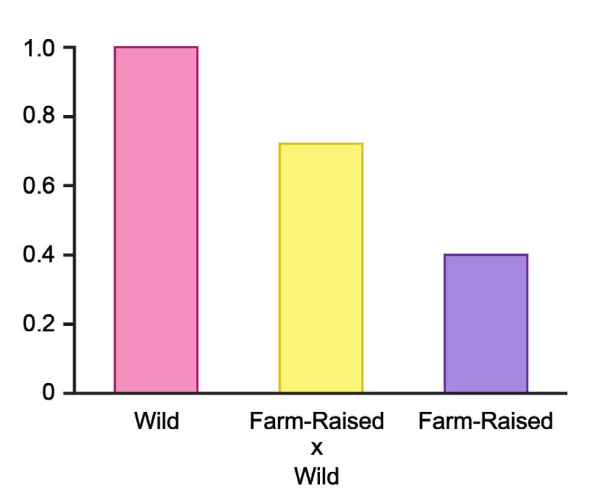
Gene flow is a crucial mechanism in the process of evolution, defined as the movement of individuals or gametes between populations that possess different allele frequencies. When individuals migrate from one population to another, they carry their alleles with them, which can significantly alter the allele frequencies in both populations. This movement generally leads to a reduction in genetic variation between the two populations, making them more similar over time.
For instance, consider two populations of butterflies separated by a river. Initially, these populations exhibit distinct allele frequencies. However, as individuals move between these populations, they introduce new alleles or reintroduce alleles that may have been lost due to genetic drift or other factors. This process not only enhances genetic diversity within a population but also contributes to the homogenization of allele frequencies across populations.
In summary, gene flow plays a vital role in shaping the genetic landscape of populations by reducing differences in allele frequencies and potentially introducing new genetic material. This dynamic process is essential for understanding how populations evolve and adapt over time, as it influences genetic variation and the overall evolutionary trajectory of species.