Natural selection is a fundamental mechanism of evolution, primarily responsible for producing adaptations in organisms. It operates by altering the frequency of specific alleles within a population, driven by the fitness of those alleles. This process can be categorized into three main patterns based on which traits exhibit greater fitness: directional selection, stabilizing selection, and disruptive selection.
Directional selection occurs when one extreme of a trait distribution is favored. For instance, in a population of Darwin's finches, if only large seeds are available, birds with larger beaks will have higher fitness. Over time, this leads to a shift in the average phenotype of the population towards larger beaks, illustrating how directional selection can change the characteristics of a population in response to environmental pressures.
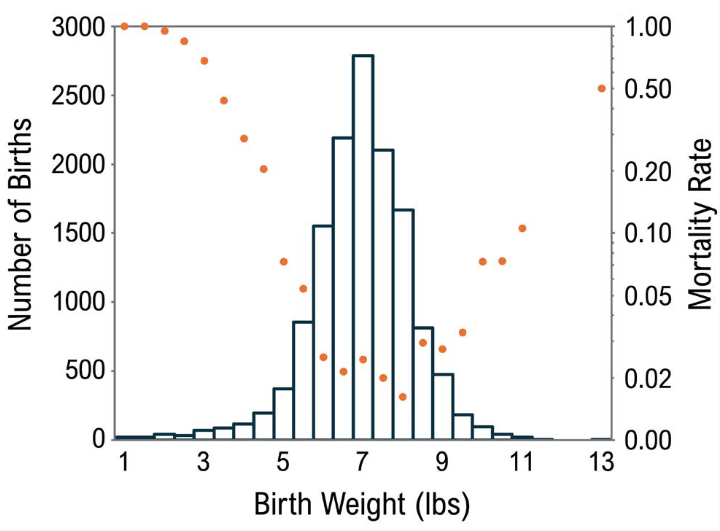
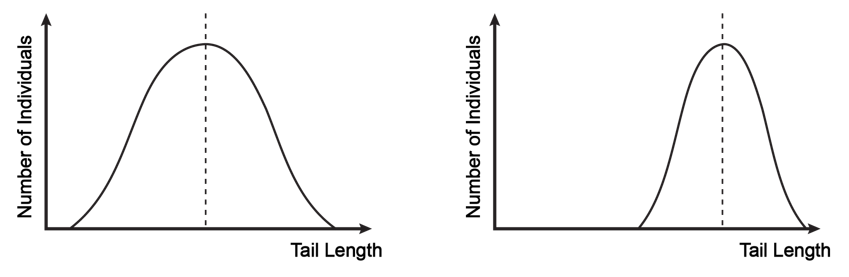
In contrast, stabilizing selection favors the average phenotype, reducing variation by selecting against extreme traits. For example, if a stable mix of seed sizes is present, birds with average-sized beaks will thrive, while those with very small or very large beaks may struggle. This type of selection stabilizes the population's traits without changing the average phenotype, as it eliminates the extremes.
Disruptive selection, on the other hand, favors both extremes of a trait distribution while selecting against the average. In a scenario where only small and large seeds are available, birds with either small or large beaks would be more successful than those with average-sized beaks. This can lead to an increase in variation within the population and potentially result in a bimodal distribution of traits. If this process continues, it may even lead to the emergence of two distinct phenotypes or the formation of new species.
Overall, natural selection plays a crucial role in shaping the diversity of life by influencing allele frequencies and promoting adaptations that enhance survival and reproduction in varying environments.