Which of the following combinations of phylum and description is incorrect? a. Echinodermata—bilateral symmetry as a larva, coelomate b. Nematoda—roundworms, pseudocoelomate c. Platyhelminthes—flatworms, gastrovascular cavity, acoelomate d. Porifera—gastrovascular cavity, coelomate
Verified step by step guidance
1
Understand the characteristics of each phylum mentioned in the options. This will help in identifying which description does not match the phylum.
Review the characteristics of Echinodermata. They are known for having bilateral symmetry as larvae and being coelomates, meaning they have a true coelom.
Examine the characteristics of Nematoda. These are roundworms and are pseudocoelomates, meaning they have a body cavity that is not completely lined by mesoderm.
Consider the characteristics of Platyhelminthes. These are flatworms, typically having a gastrovascular cavity and being acoelomates, meaning they lack a true coelom.
Analyze the characteristics of Porifera. They are sponges and do not have a gastrovascular cavity or a true coelom, which makes this combination incorrect.
Verified video answer for a similar problem:
This video solution was recommended by our tutors as helpful for the problem above
Video duration:
57s
Play a video:
Was this helpful?
Key Concepts
Here are the essential concepts you must grasp in order to answer the question correctly.
Phylum Echinodermata
Echinodermata is a phylum of marine animals known for their radial symmetry in adulthood and bilateral symmetry as larvae. They are coelomates, meaning they have a true body cavity lined with mesoderm. Examples include starfish and sea urchins.
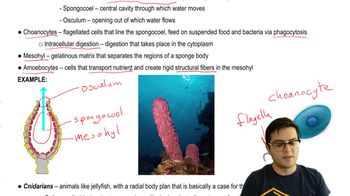
Porifera, commonly known as sponges, are simple aquatic animals characterized by a porous body and lack of true tissues and organs. They do not possess a gastrovascular cavity or a coelom, as they have a simple body plan with a system of canals and chambers for water flow.
Body Cavities: Coelomate, Pseudocoelomate, Acoelomate
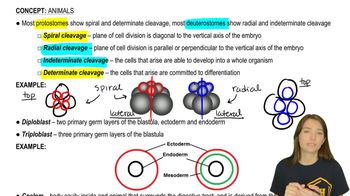
Body cavities are classified based on the presence and type of cavity. Coelomates have a true coelom lined with mesoderm, pseudocoelomates have a cavity not fully lined with mesoderm, and acoelomates lack a body cavity. These classifications help in understanding the complexity and organization of different animal phyla.