Why are proteins not considered to be a good candidate for the first living molecule? a. Their catalytic capability is not sufficient for most biological reactions. b. Their amino acid monomers were not likely present in the prebiotic soup. c. They cannot serve as a template for replication. d. They could not have polymerized from amino acid monomers under early Earth conditions.
Verified step by step guidance
1
Understand the role of proteins in biological systems: Proteins are essential macromolecules that perform a wide range of functions, including catalysis of biochemical reactions, structural support, and transport of molecules.
Consider the requirements for the first living molecule: The first living molecule would need to have the ability to store information, replicate, and catalyze reactions.
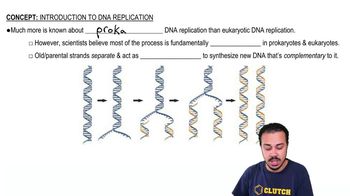
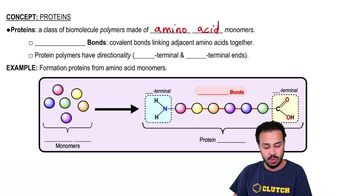
Evaluate the ability of proteins to serve as a template for replication: Proteins are composed of amino acids linked by peptide bonds, but they do not have the ability to store genetic information or serve as a template for replication like nucleic acids (DNA or RNA) do.
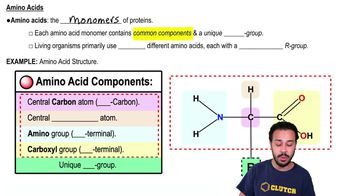
Assess the presence of amino acids in the prebiotic environment: While amino acids are the building blocks of proteins, their availability and the conditions required for polymerization into proteins under prebiotic conditions are uncertain.
Analyze the catalytic capabilities of proteins: Although proteins can act as enzymes to catalyze reactions, the first living molecule would need to have a broader range of capabilities, including self-replication, which proteins alone cannot achieve.
Verified video answer for a similar problem:
This video solution was recommended by our tutors as helpful for the problem above
Video duration:
2m
Play a video:
Was this helpful?
Key Concepts
Here are the essential concepts you must grasp in order to answer the question correctly.
Catalytic Capability of Proteins
Proteins are known for their role as enzymes, catalyzing a wide range of biological reactions. However, the catalytic capability of proteins alone is not sufficient for the origin of life, as they require a pre-existing system to synthesize and fold them into functional structures. This limitation suggests that proteins may not have been the first self-replicating molecules necessary for life.
The prebiotic soup theory posits that early Earth had a mixture of organic compounds from which life originated. However, the specific amino acids required to form proteins may not have been abundantly available or in the right conditions to spontaneously form complex proteins, making them unlikely candidates for the first living molecules.
For a molecule to be considered a candidate for the first living molecule, it must have the ability to replicate itself. Proteins lack the ability to serve as templates for replication, as they do not have a straightforward mechanism to encode and transfer genetic information, unlike nucleic acids such as RNA, which can both store information and catalyze reactions.