Explain the difference between homosporous and heterosporous plants. Where are the microsporangium and megasporangium found in a tulip? What happens to the spores that are produced by these structures?
Verified step by step guidance
1
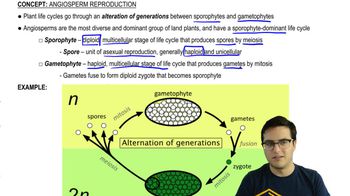
Understand the terms: Homosporous plants produce only one type of spore that typically develops into a bisexual gametophyte, which means it contains both male and female reproductive organs. Heterosporous plants produce two distinct types of spores: microspores (which develop into male gametophytes) and megaspores (which develop into female gametophytes).
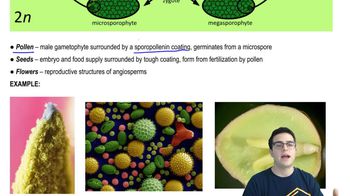
Identify the location of sporangia in tulips: In tulips, which are angiosperms (flowering plants), the microsporangium and megasporangium are located within the flower. The microsporangium is found in the anthers, which are part of the stamen (the male reproductive organ), while the megasporangium is located in the ovules, which are part of the carpel (the female reproductive organ).
Describe the development process of spores in tulips: In the microsporangium of the tulip, microspores are produced through meiosis. These microspores develop into pollen grains, which are the male gametophytes. In the megasporangium, megaspores are also produced through meiosis and one of these megaspores will develop into the female gametophyte.
Explain the fertilization process: After the pollen grains (male gametophytes) are released from the anthers, they are transferred to the stigma of a carpel (often through wind or pollinators). The pollen grain germinates on the stigma, growing a pollen tube down through the style to reach the ovule in the ovary. The sperm cells from the pollen grain then fertilize the egg cell in the female gametophyte within the ovule.
Discuss the outcome of fertilization: Following fertilization, the fertilized egg (zygote) develops into an embryo, and the ovule matures into a seed. The surrounding ovary develops into a fruit, which helps in the dispersal of the seeds.
Verified video answer for a similar problem:
This video solution was recommended by our tutors as helpful for the problem above
Video duration:
2m
Play a video:
Was this helpful?
Key Concepts
Here are the essential concepts you must grasp in order to answer the question correctly.
Homosporous vs. Heterosporous Plants
Homosporous plants produce a single type of spore that develops into a gametophyte capable of producing both male and female gametes. In contrast, heterosporous plants generate two distinct types of spores: microspores, which develop into male gametophytes, and megaspores, which develop into female gametophytes. This differentiation allows for more complex reproductive strategies and greater genetic diversity.
In flowering plants like tulips, the microsporangium is located within the anthers of the stamen, where it produces microspores that develop into pollen grains. The megasporangium is found within the ovule, located in the ovary of the pistil, and it produces megaspores that develop into the female gametophyte. These structures are essential for sexual reproduction in angiosperms.
The spores produced by the microsporangium and megasporangium serve different roles in plant reproduction. Microspores develop into pollen grains, which facilitate fertilization by transferring male gametes to the female ovule. Megaspores, on the other hand, typically undergo mitosis to form the female gametophyte, which will produce eggs for fertilization, ultimately leading to seed development.