
Acid rain contains an excess of hydrogen ions (H+). One effect of acid rain is to deplete the soil of plant nutrients such as calcium (Ca²⁺), potassium (K⁺), and magnesium (Mg²⁺). Offer a hypothesis to explain why acid rain washes these nutrients from the soil. How might you test your hypothesis?
Verified step by step guidance
1
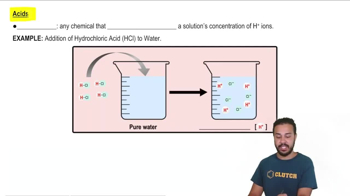
Step 1: Understand the chemical interactions involved. Acid rain contains an excess of hydrogen ions (H⁺). These ions can interact with soil particles, which often have negatively charged surfaces that bind positively charged nutrients like calcium (Ca²⁺), potassium (K⁺), and magnesium (Mg²⁺). The H⁺ ions from acid rain can displace these nutrient ions due to competitive binding.
Step 2: Formulate a hypothesis. A possible hypothesis is: 'The hydrogen ions (H⁺) in acid rain displace nutrient ions (Ca²⁺, K⁺, Mg²⁺) from soil particles, causing these nutrients to leach out of the soil and become unavailable to plants.'
Step 3: Design an experiment to test the hypothesis. Collect soil samples and divide them into two groups: one treated with acidified water (simulating acid rain) and the other treated with neutral water (control group). Ensure both groups are exposed to the same environmental conditions.
Step 4: Measure nutrient levels in the soil and leachate. After treatment, analyze the soil samples for concentrations of calcium (Ca²⁺), potassium (K⁺), and magnesium (Mg²⁺). Additionally, collect and analyze the water that drains from the soil (leachate) to determine if these nutrients have been washed out.
Step 5: Compare results between the experimental and control groups. If the acidified water group shows lower nutrient levels in the soil and higher nutrient levels in the leachate compared to the control group, this supports the hypothesis that acid rain causes nutrient leaching by displacing nutrient ions with hydrogen ions.
Verified video answer for a similar problem:
This video solution was recommended by our tutors as helpful for the problem above
Video duration:
2m
Play a video:
Was this helpful?
Key Concepts
Here are the essential concepts you must grasp in order to answer the question correctly.
Acid Rain
Acid rain is precipitation that has a lower pH than normal rainwater, primarily due to the presence of sulfuric and nitric acids formed from atmospheric pollutants. This increased acidity can lead to harmful environmental effects, including the leaching of essential nutrients from the soil, which can adversely affect plant growth and soil health.
Nutrient leaching refers to the process by which soluble substances, such as minerals and nutrients, are washed out of the soil by water. In the case of acid rain, the excess hydrogen ions can displace positively charged nutrient ions like calcium, potassium, and magnesium, leading to their removal from the soil and reducing their availability to plants.
Soil chemistry involves the study of the chemical composition and properties of soil, including its pH, nutrient content, and the interactions between soil particles and ions. Understanding soil chemistry is crucial for predicting how changes in pH, such as those caused by acid rain, can affect nutrient availability and overall soil fertility.