The phase change of an apical meristem from the juvenile to the mature vegetative phase is often revealed by a. A change in the morphology of the leaves produced b. The initiation of secondary growth c. The formation of lateral roots d. The activation of floral meristem identity genes
Verified step by step guidance
1
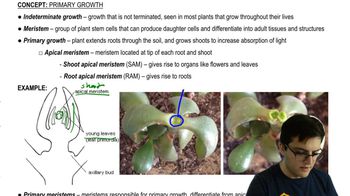
Understand the concept of apical meristem: Apical meristems are regions of actively dividing cells at the tips of roots and shoots in plants, responsible for primary growth and elongation.
Identify the juvenile and mature vegetative phases: The juvenile phase is characterized by rapid growth and development, while the mature vegetative phase involves more specialized functions and structures.
Examine the options provided: Consider how each option relates to the transition from juvenile to mature vegetative phase in plants.
Analyze option a: A change in leaf morphology often indicates a shift in developmental phase, as leaves may become more complex or specialized in the mature phase.
Consider the role of floral meristem identity genes: Activation of these genes is typically associated with the transition to reproductive phase, not the vegetative phase change.
Verified video answer for a similar problem:
This video solution was recommended by our tutors as helpful for the problem above
Video duration:
56s
Play a video:
Was this helpful?
Key Concepts
Here are the essential concepts you must grasp in order to answer the question correctly.
Apical Meristem
The apical meristem is a region of actively dividing cells located at the tips of roots and shoots in plants. It is responsible for primary growth, allowing the plant to increase in length. This meristem is crucial for the transition from juvenile to mature phases, as it dictates the development and differentiation of new tissues.
The transition from juvenile to mature vegetative phase in plants involves changes in growth patterns and morphology. During this phase change, plants may exhibit alterations in leaf shape, size, and structure, reflecting their adaptation to environmental conditions and readiness for reproductive development.
Floral meristem identity genes are crucial for the initiation of flowering in plants. These genes regulate the transformation of vegetative meristems into floral meristems, marking the plant's transition from vegetative growth to reproductive development. Activation of these genes is a key indicator of the plant reaching maturity.