What do the receptor cells in the lateral line system along the sides of a shark and the cochlea of your ear have in common? a. They use hair cells to sense sound or pressure waves. b. They are organs of equilibrium. c. They use electromagnetic receptors to sense pressure waves in fluid. d. They use granules that signal a change in position and stimulate their receptor cells.
Verified step by step guidance
1
Step 1: Begin by understanding the lateral line system in sharks. The lateral line system is a sensory organ that detects pressure changes and vibrations in water, helping the shark sense movement and locate prey. It uses specialized receptor cells called hair cells.
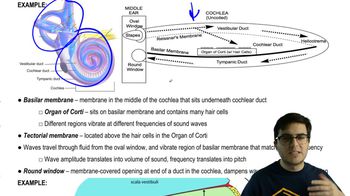
Step 2: Next, examine the cochlea in the human ear. The cochlea is a spiral-shaped organ responsible for detecting sound waves. It contains hair cells that convert sound vibrations into electrical signals for the brain to interpret.
Step 3: Compare the receptor cells in both systems. Both the lateral line system and the cochlea rely on hair cells to sense mechanical stimuli, such as pressure waves or sound vibrations, making this a shared characteristic.
Step 4: Eliminate incorrect answer choices by analyzing their descriptions. For example, electromagnetic receptors are not involved in sensing pressure waves, and granules signaling positional changes are related to equilibrium organs, not the lateral line or cochlea.
Step 5: Conclude that the correct answer is the option describing the use of hair cells to sense sound or pressure waves, as this is the common feature between the lateral line system and the cochlea.
Verified video answer for a similar problem:
This video solution was recommended by our tutors as helpful for the problem above
Video duration:
1m
Play a video:
Was this helpful?
Key Concepts
Here are the essential concepts you must grasp in order to answer the question correctly.
Hair Cells
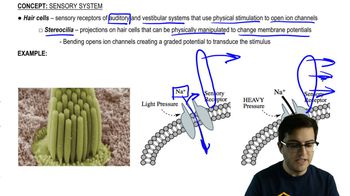
Hair cells are specialized sensory cells found in various organisms, including sharks and humans. They are equipped with tiny hair-like structures called stereocilia that detect mechanical stimuli, such as sound or pressure waves. In both the lateral line system of sharks and the cochlea of the human ear, hair cells play a crucial role in converting these mechanical signals into electrical impulses that the nervous system can interpret.
The lateral line system is a sensory organ found in aquatic animals, including sharks, that detects water movements and vibrations. It consists of a series of mechanoreceptors, including hair cells, arranged in a line along the sides of the body. This system allows sharks to sense changes in their environment, such as the presence of prey or predators, by responding to pressure waves in the water.
The cochlea is a spiral-shaped organ in the inner ear of mammals, including humans, responsible for hearing. It contains hair cells that respond to sound waves transmitted through the fluid-filled structure. As sound waves enter the cochlea, they create pressure changes that stimulate the hair cells, leading to the conversion of sound into neural signals that the brain interprets as sound perception.