Understanding energy flow through an ecosystem is crucial for grasping how organisms interact with their environment. Two key concepts in this context are gross productive energy and assimilated energy. Gross productive energy, abbreviated as GPP, refers to the total amount of energy captured by an organism. For primary producers, this is known as gross primary productivity, while for consumers, it is termed gross consumer productivity (GCP). In some literature, GCP is also referred to as secondary productivity.
It is important to note that not all of the gross productive energy can be utilized by an organism. A portion of this energy is lost as waste and heat, leading to the concept of assimilated energy (AE). Assimilated energy represents the fraction of gross productive energy that is actually used by the organism for cellular respiration and the production of new biomass. Biomass refers to the total mass of living organisms, which can be measured at the individual or population level. The production of new biomass can occur through growth or reproduction.
For primary producers, GPP is approximately equal to assimilated energy because they typically generate minimal waste compared to consumers. For example, if a primary producer captures 1,000 kilojoules of solar energy, this amount represents both its GPP and AE. This energy is then allocated between cellular respiration and biomass production, with the biomass being available for consumption by herbivores.
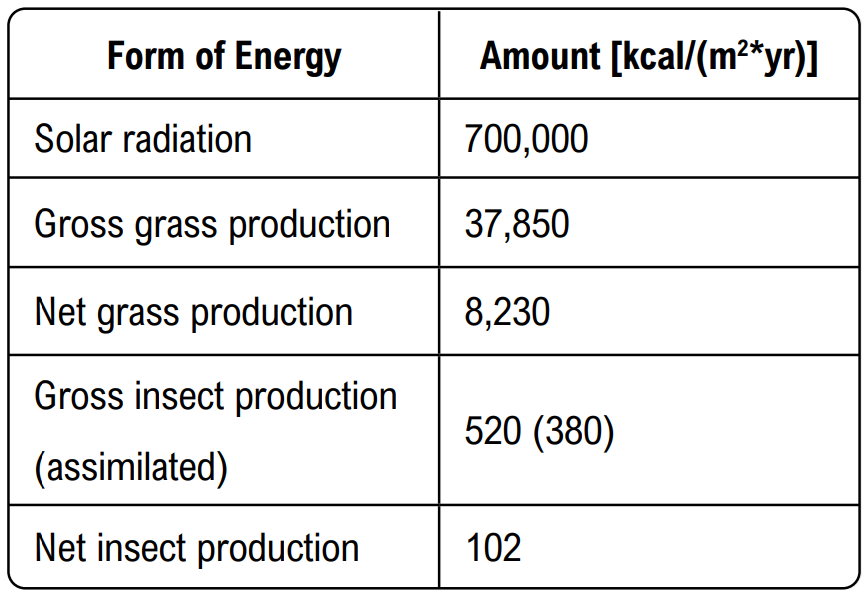
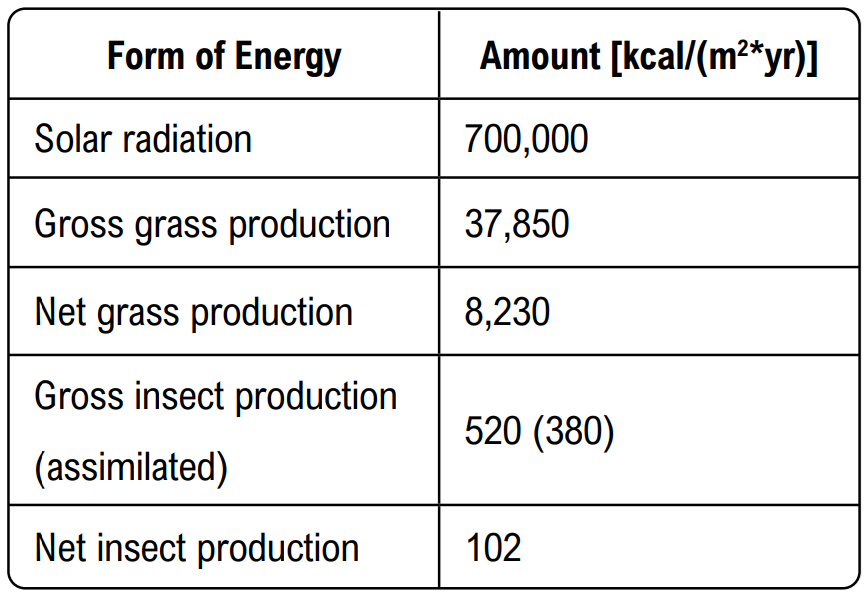
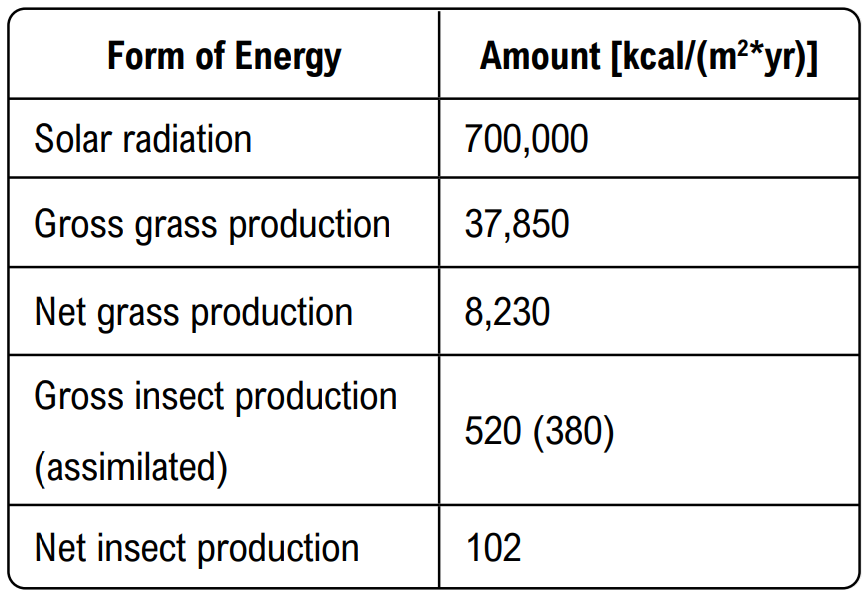
When a consumer, such as a herbivore, consumes plant biomass, it captures a portion of the energy, which constitutes its GCP. However, similar to primary producers, not all of this energy is assimilated. For instance, if a herbivore captures 450 kilojoules from plant biomass, it may lose 150 kilojoules as waste and heat, resulting in 300 kilojoules of assimilated energy. This assimilated energy is then used for the herbivore's own cellular respiration and biomass production.
In summary, the distinction between gross productive energy and assimilated energy is fundamental in understanding energy dynamics within ecosystems. Gross primary productivity (GPP) for primary producers is closely aligned with assimilated energy, while for consumers, gross consumer productivity (GCP) is subject to significant losses, highlighting the complexities of energy transfer in ecological systems.