Lovastatin, a drug used to lower serum cholesterol.
Look up the molecular formula for Lovastatin and calculate the molar mass.
Verified step by step guidance
1
Identify the molecular formula of Lovastatin. You can find this information in a reliable chemical database or resource. The molecular formula for Lovastatin is C27H36O5.
Break down the molecular formula into its constituent elements: Carbon (C), Hydrogen (H), and Oxygen (O).
Determine the atomic mass of each element using the periodic table: Carbon (C) has an atomic mass of approximately 12.01 g/mol, Hydrogen (H) has an atomic mass of approximately 1.01 g/mol, and Oxygen (O) has an atomic mass of approximately 16.00 g/mol.
Calculate the total mass contributed by each element in the molecular formula: Multiply the number of each type of atom by its atomic mass. For example, for Carbon: 27 atoms * 12.01 g/mol.
Add the total masses of all elements together to find the molar mass of Lovastatin.
Verified video answer for a similar problem:
This video solution was recommended by our tutors as helpful for the problem above.
Video duration:
1m
Play a video:
0 Comments
Key Concepts
Here are the essential concepts you must grasp in order to answer the question correctly.
Molecular Formula
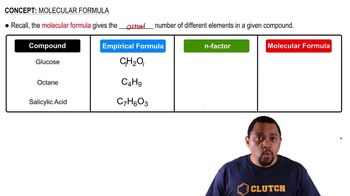
The molecular formula of a compound indicates the types and numbers of atoms present in a molecule. For Lovastatin, the molecular formula is C20H30O5, which means it contains 20 carbon atoms, 30 hydrogen atoms, and 5 oxygen atoms. Understanding the molecular formula is essential for calculating the molar mass and for grasping the compound's chemical structure.
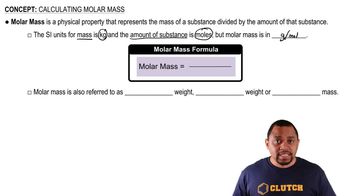
Molar mass is the mass of one mole of a substance, typically expressed in grams per mole (g/mol). It is calculated by summing the atomic masses of all atoms in the molecular formula. For Lovastatin, the molar mass can be determined by multiplying the number of each type of atom by its respective atomic mass and adding these values together, providing insight into the compound's weight and its behavior in chemical reactions.
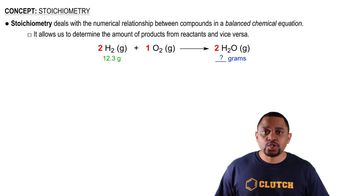
Stoichiometry is the branch of chemistry that deals with the quantitative relationships between the reactants and products in a chemical reaction. It is crucial for understanding how to use the molar mass in calculations involving moles, concentrations, and yields. In the context of Lovastatin, stoichiometry helps in determining how much of the drug is needed for effective dosage based on its molar mass.

 1:59 minutes
 Verified step by step guidance
 02:08
02:08