What is the difference between a physical change and a chemical change?
Verified step by step guidance
1
Identify the definitions: A physical change involves a change in the physical properties of a substance without altering its chemical composition, while a chemical change results in the formation of one or more new substances with different chemical properties.
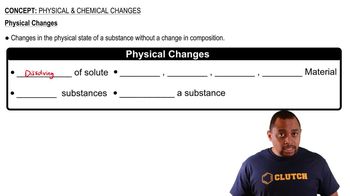
Consider examples of physical changes: These include changes in state (such as melting, freezing, or boiling), changes in shape (such as cutting or bending), and changes in size (such as grinding or dissolving).
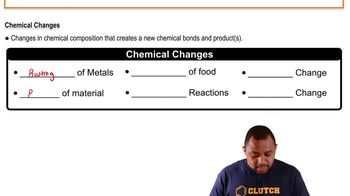
Consider examples of chemical changes: These include reactions like combustion, rusting, and digestion, where new substances are formed and energy is often absorbed or released.
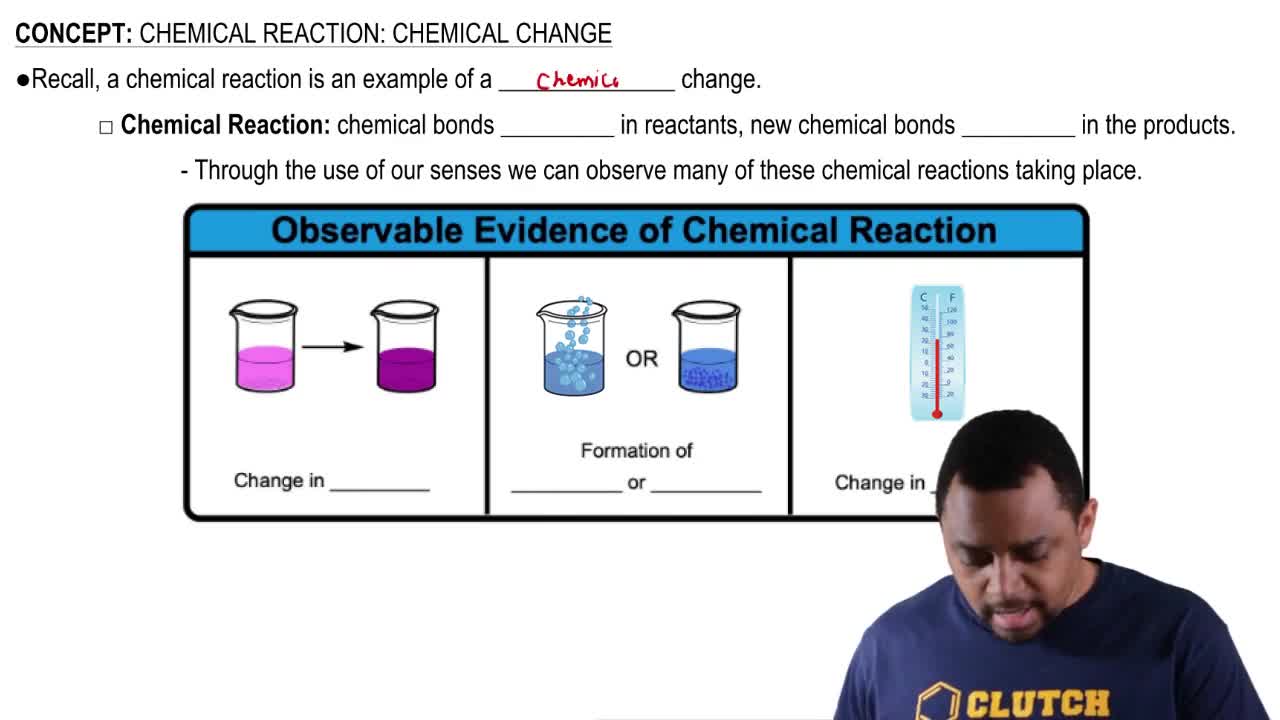
Look for indicators of a chemical change: These can include a change in color, the formation of a precipitate, the evolution of gas, or a change in temperature or light.
Understand reversibility: Physical changes are often reversible, while chemical changes usually are not, as they involve the formation of new substances.
Verified video answer for a similar problem:
This video solution was recommended by our tutors as helpful for the problem above.
Video duration:
2m
Play a video:
0 Comments
Key Concepts
Here are the essential concepts you must grasp in order to answer the question correctly.
Physical Change
A physical change refers to a transformation that alters the form or appearance of a substance without changing its chemical composition. Examples include changes in state, such as melting ice into water or dissolving sugar in water. These changes are usually reversible, meaning the original substance can be recovered.
A chemical change involves a process where one or more substances are transformed into different substances with distinct chemical properties. This can include reactions such as combustion, rusting, or fermentation. Chemical changes are typically irreversible under normal conditions, as new substances are formed that cannot easily revert to the original materials.
Indicators of physical and chemical changes help distinguish between the two. Physical changes may be indicated by changes in state, shape, or size, while chemical changes often involve color changes, gas production, or temperature changes. Recognizing these indicators is essential for identifying the type of change occurring in a substance.

 2:01 minutes
 Verified step by step guidance
 01:41
01:41