Use the words inspiration and expiration to describe the part of the breathing cycle that occurs as a result of each of the following:c. The pressure within the lungs is higher than that of the atmosphere.
Verified step by step guidance
1
Inspiration and expiration are two phases of the breathing cycle.
Inspiration occurs when the pressure inside the lungs is lower than the atmospheric pressure, causing air to flow into the lungs.
Expiration occurs when the pressure inside the lungs is higher than the atmospheric pressure, causing air to flow out of the lungs.
In this scenario, since the pressure within the lungs is higher than that of the atmosphere, expiration is the part of the breathing cycle that occurs.
During expiration, the diaphragm and intercostal muscles relax, decreasing the volume of the thoracic cavity and increasing the pressure in the lungs, pushing air out.
Was this helpful?
Key Concepts
Here are the essential concepts you must grasp in order to answer the question correctly.
Gas Laws
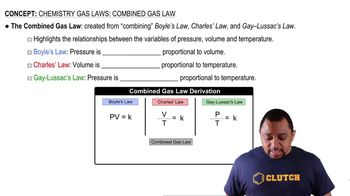
Gas laws describe the behavior of gases in relation to pressure, volume, and temperature. One key principle is that when the volume of a gas decreases, its pressure increases, provided the temperature remains constant. This relationship is crucial for understanding how changes in lung volume during breathing affect air pressure and flow.
Breathing mechanics involve the physical processes of inhalation and exhalation. During inhalation, the diaphragm contracts, increasing lung volume and decreasing pressure, allowing air to flow in. Conversely, during expiration, the diaphragm relaxes, decreasing lung volume and increasing pressure, which forces air out of the lungs.
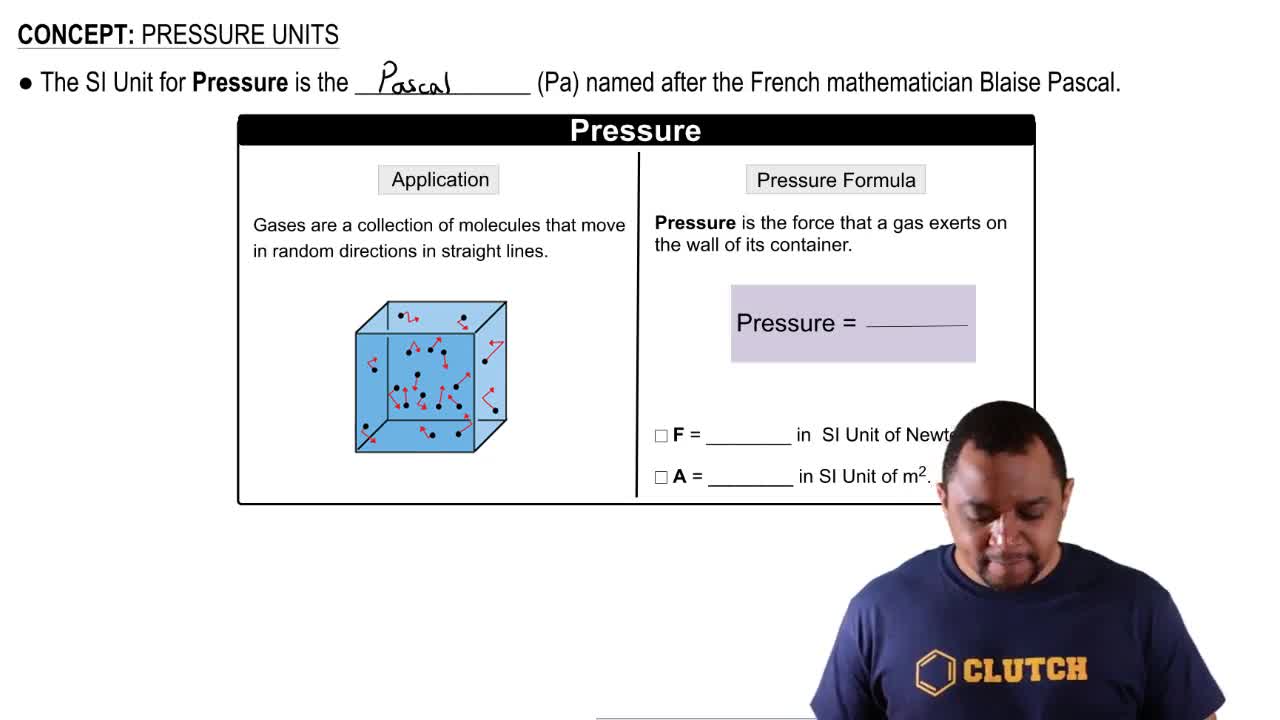
A pressure gradient refers to the difference in pressure between two areas, which drives the movement of air. In the context of breathing, when the pressure inside the lungs exceeds atmospheric pressure, air is expelled from the lungs to equalize the pressure. This principle is fundamental to understanding how air moves in and out of the respiratory system.