
Ch. 10 Muscle Tissue and Physiology
Amerman - Human Anatomy & Physiology 2nd Edition
Amerman2nd EditionHuman Anatomy & PhysiologyISBN: 9780136873822Not the one you use?Change textbook
Chapter 10, Problem L3.5

Jesse is a 2-year-old boy who presents with difficulty in walking and poor control of movements. When the doctor examines Jesse, she notices that when his muscles contract, they are very slow to relax and remain contracted well after the movement has been performed. She sends a sample of his tissue for genetic analysis, and the lab reports a genetic defect that causes the pumps in the SR to operate much more slowly than normal. How does a defect in DNA lead to a malfunctioning protein? How does this finding explain Jesse's symptoms?

Verified step by step guidance
1
Understand the relationship between DNA and proteins: DNA contains the instructions for making proteins. A gene is a segment of DNA that codes for a specific protein. If there is a mutation or defect in the DNA sequence of a gene, it can lead to the production of a malfunctioning or improperly folded protein.
Explain the role of the sarcoplasmic reticulum (SR) and its pumps: The sarcoplasmic reticulum is an organelle in muscle cells that stores and releases calcium ions (Ca²⁺). Calcium ions are essential for muscle contraction and relaxation. The SR contains calcium pumps (specifically, SERCA pumps) that actively transport calcium back into the SR after a muscle contraction, allowing the muscle to relax.
Connect the genetic defect to the malfunctioning protein: If the DNA coding for the SERCA pump is defective, the resulting protein may not function properly. For example, the pump may work more slowly than normal, reducing its ability to efficiently transport calcium back into the SR.
Relate the malfunctioning protein to Jesse's symptoms: When the SERCA pump operates slowly, calcium remains in the cytoplasm of the muscle cell for a longer period. This prolonged presence of calcium keeps the muscle fibers in a contracted state, leading to delayed relaxation after contraction. This explains Jesse's difficulty in walking and poor control of movements, as his muscles are unable to relax quickly enough for smooth, coordinated motion.
Summarize the connection: Jesse's symptoms are caused by a genetic defect that leads to a malfunctioning SERCA pump. This defect disrupts the normal calcium cycling in his muscle cells, resulting in prolonged muscle contraction and difficulty in movement control.

Verified video answer for a similar problem:

This video solution was recommended by our tutors as helpful for the problem above.
Was this helpful?

Key Concepts

Here are the essential concepts you must grasp in order to answer the question correctly.

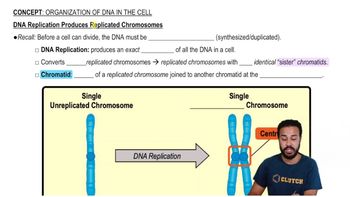
DNA and Protein Synthesis

DNA contains the genetic instructions for the development and functioning of living organisms. It is transcribed into messenger RNA (mRNA), which is then translated into proteins. Proteins are essential for various cellular functions, including muscle contraction. A defect in DNA can lead to the production of malfunctioning proteins, which can disrupt normal physiological processes.
Recommended video:
05:13
DNA Replication

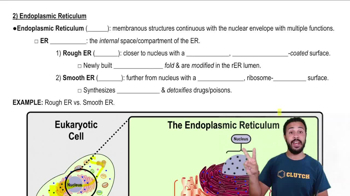
Sarcoplasmic Reticulum (SR) Function

The sarcoplasmic reticulum (SR) is an organelle in muscle cells that stores and releases calcium ions, crucial for muscle contraction and relaxation. When a muscle contracts, calcium is released from the SR, allowing the muscle fibers to shorten. If the SR's calcium pumps operate slowly due to a genetic defect, calcium levels may not return to baseline quickly, leading to prolonged muscle contraction and difficulty in movement, as seen in Jesse.
Recommended video:
06:07
Endoplasmic Reticulum

Genetic Mutations and Their Effects

Genetic mutations are changes in the DNA sequence that can affect how proteins are made or function. These mutations can lead to the production of proteins that are either nonfunctional or less effective. In Jesse's case, the mutation affects the calcium pumps in the SR, resulting in impaired muscle relaxation and contributing to his symptoms of poor movement control and difficulty walking.
Recommended video:
1:32
Effects of the Complement System
Related Practice
Textbook Question

Paola is a 3-year-old girl with a disease that reduces the ability of her mitochondria to generate ATP. Explain the specific effects of this disease on the ability of Paola's muscles to function properly. What other tissues and organs are likely to be especially affected by her disease, and why?

700
views
Textbook Question

Mr. Nasheed has cerebral palsy and suffers severe skeletal muscle spasms as a result of his condition. He is prescribed the drug dantrolene, which prevents the release of Ca2+ from the SR. Explain how this will treat his muscle spasms.

819
views
Textbook Question

The primary action of the biceps brachii muscle of the anterior arm is to flex the forearm at the elbow. However, when this muscle is inflamed, pain is felt in the shoulder. Explain this finding.

880
views
Textbook Question

How does a skeletal muscle fiber differ structurally from typical cells?

1050
views
1
rank
Textbook Question

Some athletes will consume only protein for several days before a competition, which reduces the amount of glycogen in both the muscle fibers and the liver. What effect would this have on their ability to perform activities that require short, powerful bursts of activity? How would it affect their ability to perform endurance activities?

811
views
Textbook Question

Ms. Sanchez was in a motorcycle accident in which she lost the use of her right upper limb muscles due to significant nerve damage. However, when an electrode is inserted into her muscles, they are able to contract. Explain specifically why nerve damage caused her to lose the use of her muscles. Why can they still respond to stimulation from an electrode?

781
views