
Identify four hormones that mediate major physiological adjustments affecting fluid and electrolyte balance. What are the primary effects of each hormone?
Verified step by step guidance
1
Step 1: Understand that fluid and electrolyte balance in the body is tightly regulated by hormones that influence kidney function, thirst, and cellular ion transport.
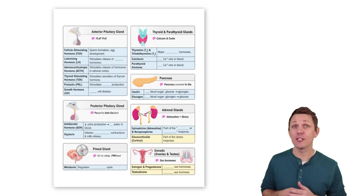
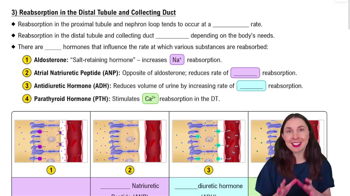
Step 2: Identify four key hormones involved in this regulation: Antidiuretic Hormone (ADH), Aldosterone, Atrial Natriuretic Peptide (ANP), and Parathyroid Hormone (PTH).
Step 3: Describe the primary effect of Antidiuretic Hormone (ADH), which increases water reabsorption in the kidneys by making the collecting ducts more permeable to water, thus reducing urine output and conserving body water.
Step 4: Explain Aldosterone's role in promoting sodium reabsorption and potassium excretion in the distal tubules and collecting ducts of the kidneys, which helps retain sodium and water, increasing blood volume and pressure.
Step 5: Outline the effects of Atrial Natriuretic Peptide (ANP), which promotes sodium and water excretion by the kidneys, leading to decreased blood volume and pressure, and Parathyroid Hormone (PTH), which regulates calcium and phosphate balance by increasing calcium reabsorption in the kidneys and mobilizing calcium from bones.
Verified video answer for a similar problem:
This video solution was recommended by our tutors as helpful for the problem above
Play a video:
0 Comments
Key Concepts
Here are the essential concepts you must grasp in order to answer the question correctly.
Hormonal Regulation of Fluid and Electrolyte Balance
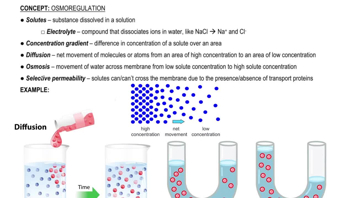
This concept involves understanding how hormones control the body's water and electrolyte levels by influencing kidney function, thirst, and salt retention. Hormones act as chemical messengers to maintain homeostasis, adjusting fluid volume and ion concentrations in response to physiological needs.
Antidiuretic Hormone (ADH) and Aldosterone Functions
ADH promotes water reabsorption in the kidneys, reducing urine output to conserve water, while aldosterone increases sodium reabsorption and potassium excretion, helping regulate blood volume and pressure. Both hormones are key in maintaining fluid balance and electrolyte concentrations.
Role of Atrial Natriuretic Peptide (ANP) and Parathyroid Hormone (PTH)
ANP reduces blood volume by promoting sodium and water excretion, counteracting aldosterone effects. PTH regulates calcium and phosphate balance by increasing calcium reabsorption in kidneys and mobilizing calcium from bones, thus influencing electrolyte homeostasis.