Describe the roles of the following components of the ECM: Elastic fibers
Verified step by step guidance
1
Understand that the ECM (extracellular matrix) is a network of proteins and carbohydrates that provides structural and biochemical support to surrounding cells.
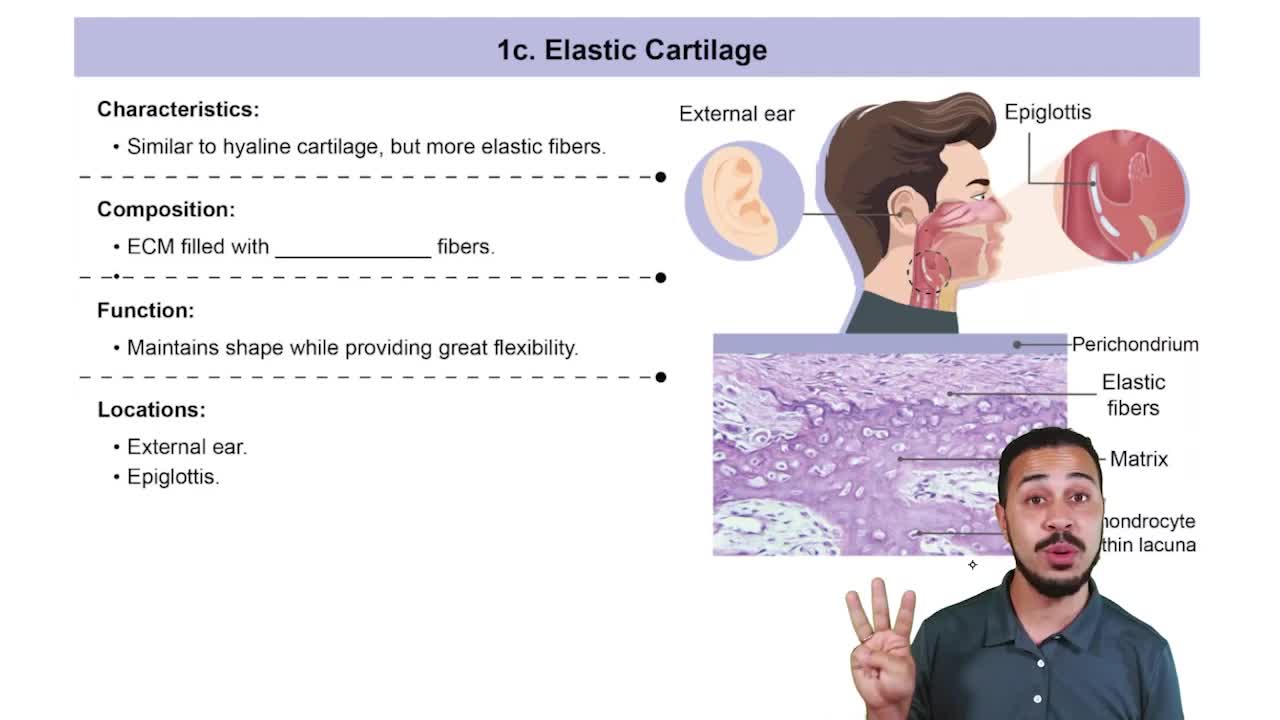
Recognize that elastic fibers are a key component of the ECM, primarily composed of the protein elastin and surrounded by a glycoprotein called fibrillin, which organizes the elastin into functional fibers.
Learn that the primary role of elastic fibers is to provide elasticity and resilience to tissues, allowing them to stretch and recoil. This is particularly important in tissues like skin, lungs, and blood vessels.
Understand that elastic fibers work in conjunction with collagen fibers in the ECM. While collagen provides tensile strength to prevent overstretching, elastic fibers allow tissues to return to their original shape after deformation.
Note that defects in elastic fibers, such as mutations in the fibrillin gene (as seen in Marfan syndrome), can lead to structural weaknesses in tissues, highlighting their critical role in maintaining tissue integrity and function.
Verified video answer for a similar problem:
This video solution was recommended by our tutors as helpful for the problem above
Play a video:
Was this helpful?
Key Concepts
Here are the essential concepts you must grasp in order to answer the question correctly.
Extracellular Matrix (ECM)
The extracellular matrix (ECM) is a complex network of proteins and carbohydrates that provides structural and biochemical support to surrounding cells. It plays a crucial role in tissue and organ function, influencing cell behavior, migration, and differentiation. Understanding the ECM is essential for comprehending how various components, like elastic fibers, contribute to tissue elasticity and resilience.
Elastic fibers are specialized protein structures primarily composed of elastin and fibrillin, which provide elasticity and resilience to tissues. They allow tissues to stretch and recoil, which is vital in organs that undergo significant deformation, such as the lungs and blood vessels. The presence and organization of elastic fibers in the ECM are critical for maintaining the mechanical properties of these tissues.
Tissue mechanics refers to the study of the mechanical properties and behaviors of biological tissues under various forces and conditions. It encompasses how tissues respond to stretching, compression, and other mechanical stresses. Understanding tissue mechanics is important for analyzing the functional roles of components like elastic fibers in maintaining tissue integrity and facilitating movement.