
Textbook Question
The most important factor affecting the pH of body tissues is the concentration of:
(a) Lactic acid
(b) Ketone bodies,
(c) Metabolic acids
(d) Carbon dioxide
(e) Hydrochloric acid
104
views

 Verified step by step guidance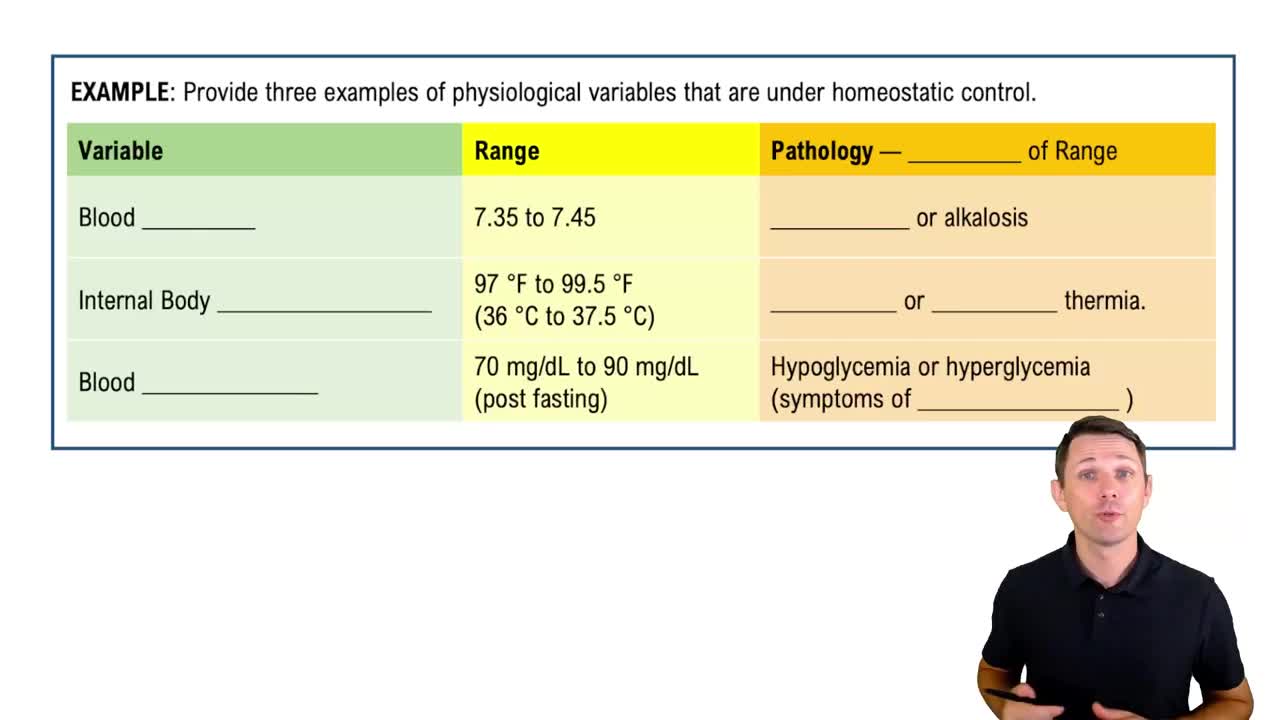
 03:46
03:46
 01:29
01:29 6:12
6:12The most important factor affecting the pH of body tissues is the concentration of:
(a) Lactic acid
(b) Ketone bodies,
(c) Metabolic acids
(d) Carbon dioxide
(e) Hydrochloric acid
Metabolic alkalosis occurs when:
(a) Bicarbonate ion concentrations become elevated
(b) A severe bicarbonate loss occurs
(c) The kidneys fail to excrete hydrogen ions
(d) Ketone bodies are generated in abnormally large quantities
Identify four hormones that mediate major physiological adjustments affecting fluid and electrolyte balance. What are the primary effects of each hormone?
Drinking a solution hypotonic to the ECF causes the ECF to:
(a) Increase in volume and become hypertonic to the ICF
(b) Decrease in volume and become hypertonic to the ICF
(c) Decrease in volume and become hypotonic to the ICF
(d) Increase in volume and become hypotonic to the ICF
Changes in the pH of body fluids are compensated for by all of the following except:
(a) An increase in urine output
(b) The carbonic acid–bicarbonate buffer system
(c) The phosphate buffer system
(d) Changes in the rate and depth of breathing
(e) Protein buffers
Calcium homeostasis primarily reflects:
(a) A balance between absorption in the gut and excretion by the kidneys
(b) Careful regulation of the blood calcium level by the kidneys
(c) An interplay between parathyroid hormone and aldosterone,
(d) An interplay among reserves in the bones, the rate of absorption, and the rate of excretion
(e) Hormonal control of calcium reserves in the bones