Ch. 1 Introduction to Anatomy and Physiology
Amerman - Human Anatomy & Physiology 2nd Edition
Amerman2nd EditionHuman Anatomy & PhysiologyISBN: 9780136873822Not the one you use?Change textbook
Chapter 1, Problem L3.2

During a procedure on Ms. Norman's pancreas, a surgeon makes the initial incision in the left anterior hypochondriac region. List all the organs, serous membranes, and body cavities that the surgeon will encounter as she moves through the body to get to the pancreas. (Hint: Refer to A&P in the Real World: Abdominal Pain for help.)

Verified step by step guidance
1
Identify the location of the left anterior hypochondriac region. This region is part of the abdominopelvic cavity and is located in the upper left portion of the abdomen, just below the ribcage. It contains parts of the stomach, spleen, and other structures.
Understand the layers the surgeon will encounter during the incision. These include the skin, subcutaneous tissue, and the muscular layers of the abdominal wall (e.g., external oblique, internal oblique, and transversus abdominis muscles).
Recognize the serous membranes involved. As the surgeon moves deeper, they will encounter the parietal peritoneum, which lines the abdominal cavity, and then the visceral peritoneum, which covers the organs within the cavity.
List the organs encountered on the way to the pancreas. Depending on the exact path, the surgeon may encounter the stomach, spleen, and possibly parts of the small intestine (e.g., duodenum) before reaching the pancreas, which is located posterior to the stomach.
Identify the body cavities involved. The pancreas is located in the retroperitoneal space, which is behind the peritoneal cavity. The surgeon will transition from the peritoneal cavity to the retroperitoneal space to access the pancreas.

Verified video answer for a similar problem:

This video solution was recommended by our tutors as helpful for the problem above.
Was this helpful?

Key Concepts

Here are the essential concepts you must grasp in order to answer the question correctly.

Anatomical Regions

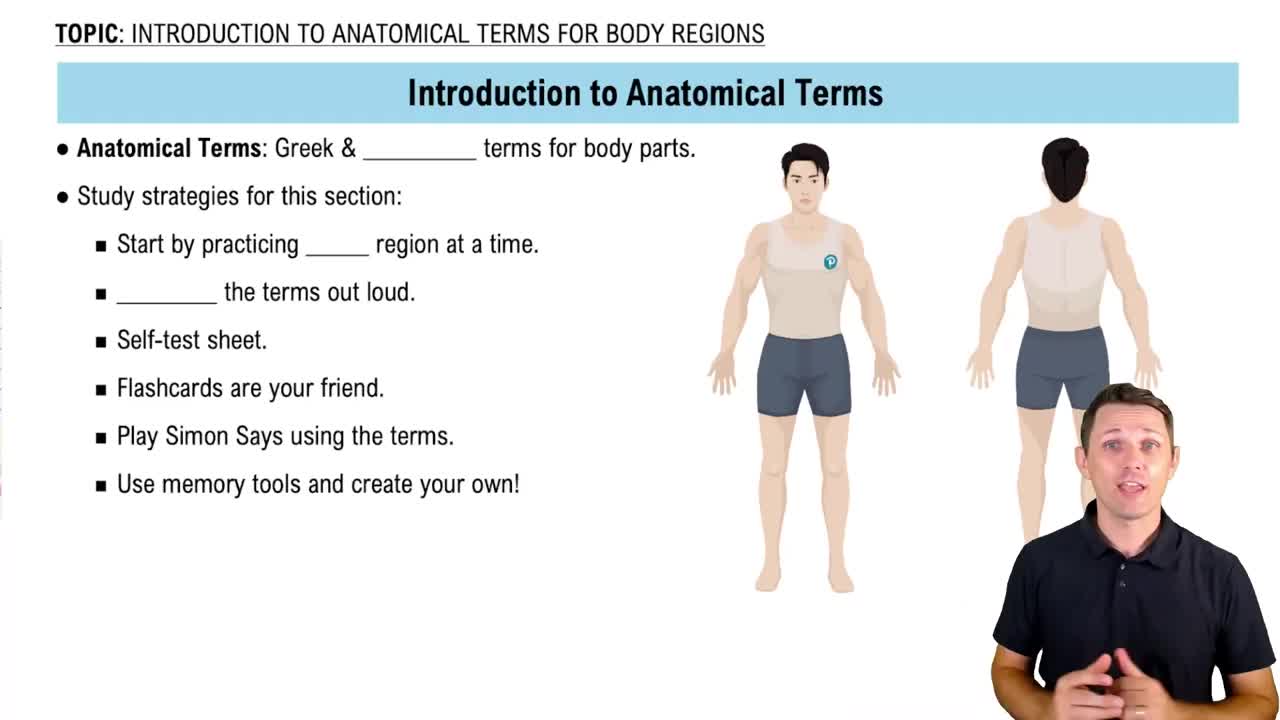
Anatomical regions are specific areas of the body that help in identifying the location of organs and structures. The left anterior hypochondriac region is one of the nine abdominal regions, located in the upper left quadrant, and contains organs such as the spleen and parts of the stomach. Understanding these regions is crucial for surgeons to navigate the body accurately during procedures.
Recommended video:
Guided course
03:21
Introduction to Anatomical Terms

Serous Membranes

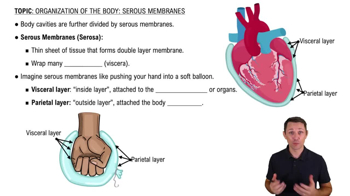
Serous membranes are thin layers of tissue that line body cavities and cover organs, providing lubrication and reducing friction during movement. In the abdominal cavity, the peritoneum is the primary serous membrane, which encases the abdominal organs, including the pancreas. Knowledge of these membranes is essential for understanding the surgical approach and potential complications.
Recommended video:
Guided course
4:09
Serous Membranes

Abdominal Cavity Anatomy

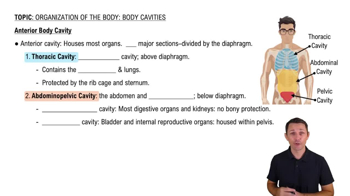
The abdominal cavity houses various organs and is divided into quadrants and regions for easier reference. Key organs in this cavity include the liver, stomach, intestines, and pancreas. Familiarity with the anatomy of the abdominal cavity is vital for surgeons to anticipate the structures they will encounter and to perform procedures safely and effectively.
Recommended video:
Guided course
3:25
Anterior Body Cavity