Ch. 19 The Cardiovascular System: Blood Vessels
Marieb - Human Anatomy & Physiology 7th Edition
Marieb, Hoehn7th EditionHuman Anatomy & PhysiologyISBN: 9780805359091Not the one you use?Change textbook
Chapter 18, Problem 18

Physiologists often consider capillaries and postcapillary venules together.
a. What functions do these vessels share?
b. Structurally, how do they differ?

Verified step by step guidance
1
Step 1: Understand the shared functions of capillaries and postcapillary venules. Both types of vessels are involved in the exchange of substances between the blood and surrounding tissues, including nutrients, gases, and waste products. They also play a role in the regulation of blood flow and immune cell trafficking.
Step 2: Identify the specific functions related to permeability. Capillaries and postcapillary venules both allow for the passage of fluids and cells, but postcapillary venules are especially important sites for leukocyte (white blood cell) exit from the bloodstream during inflammation.
Step 3: Examine the structural features of capillaries. Capillaries are composed primarily of a single layer of endothelial cells with a thin basement membrane, which facilitates efficient exchange of materials.
Step 4: Compare the structure of postcapillary venules to capillaries. Postcapillary venules are slightly larger in diameter, have a similar endothelial lining, but also possess a more developed basement membrane and surrounding pericytes, which provide structural support.
Step 5: Summarize the key structural difference. While both vessels have endothelial linings, postcapillary venules have a structure that supports their role in leukocyte trafficking and fluid exchange, distinguishing them from the simpler capillary walls.

Verified video answer for a similar problem:

This video solution was recommended by our tutors as helpful for the problem above.
Video duration:
1m
Was this helpful?

Key Concepts

Here are the essential concepts you must grasp in order to answer the question correctly.

Functions of Capillaries and Postcapillary Venules

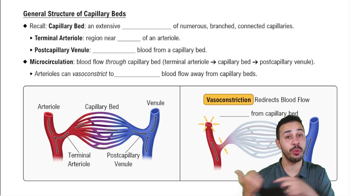
Both capillaries and postcapillary venules facilitate the exchange of gases, nutrients, and waste products between blood and tissues. They also play key roles in immune responses by allowing leukocyte migration and regulating fluid balance through filtration and reabsorption.
Recommended video:
5:59
General Structure of Capillary Beds

Structural Characteristics of Capillaries

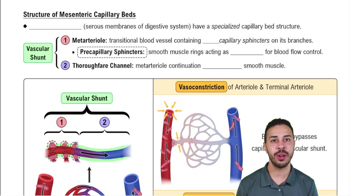
Capillaries are the smallest blood vessels with thin walls composed of a single layer of endothelial cells and a basement membrane. This minimal structure allows efficient exchange of substances but provides limited mechanical support.
Recommended video:
6:52
Structure of Mesenteric Capillary Beds

Structural Characteristics of Postcapillary Venules

Postcapillary venules are slightly larger than capillaries and have a thin endothelial lining with a discontinuous basement membrane. Unlike capillaries, they have pericytes and are more permeable, facilitating leukocyte passage during inflammation.
Recommended video:
Guided course
04:15
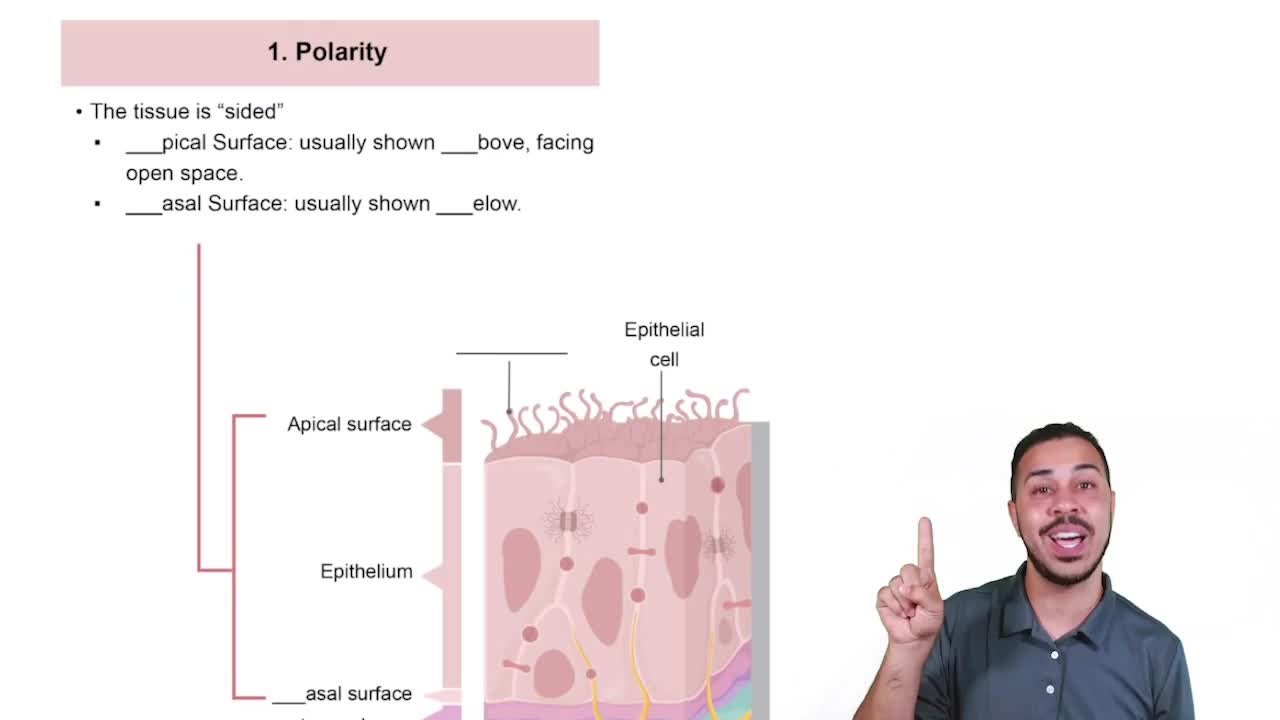
Characteristic 1: Polarity